

Hello! I’m back online after a few weeks of rest and recovery post-surgery. In a strange, twisted way, it was such a treat to be fully offline, gobbling up books, crosswords, and old movies in between endless sleep. I do feel a tinge of sadness when I think that most of us, myself included, only afford ourselves true rest when the body forces us to stop.
This period has been a funny little experiment for me in how dress affects our nervous systems and emotional states. Under the guidance of both my acupuncturist, Elaine Huntzinger, and my OBGYN, I’ve vowed never to be cold in 2026 and to do away with any tight-fitting clothing. According to TCM, for women with womb-related issues, it’s crucial to ensure warmth of the feet, neck, and lower back. And too-tight trousers can be interpreted by the nervous system as a threat, triggering further inflammation. Loose-cut, warm, softly fibre-d clothing allows my body to feel safe, exhale, and concentrate on its only job right now: healing. Give it a go if you suffer from any kind of pelvic pain, even during periods!
Ziyad Buainain @ziyadbuainain
https://www.ziyadbuainain.com/
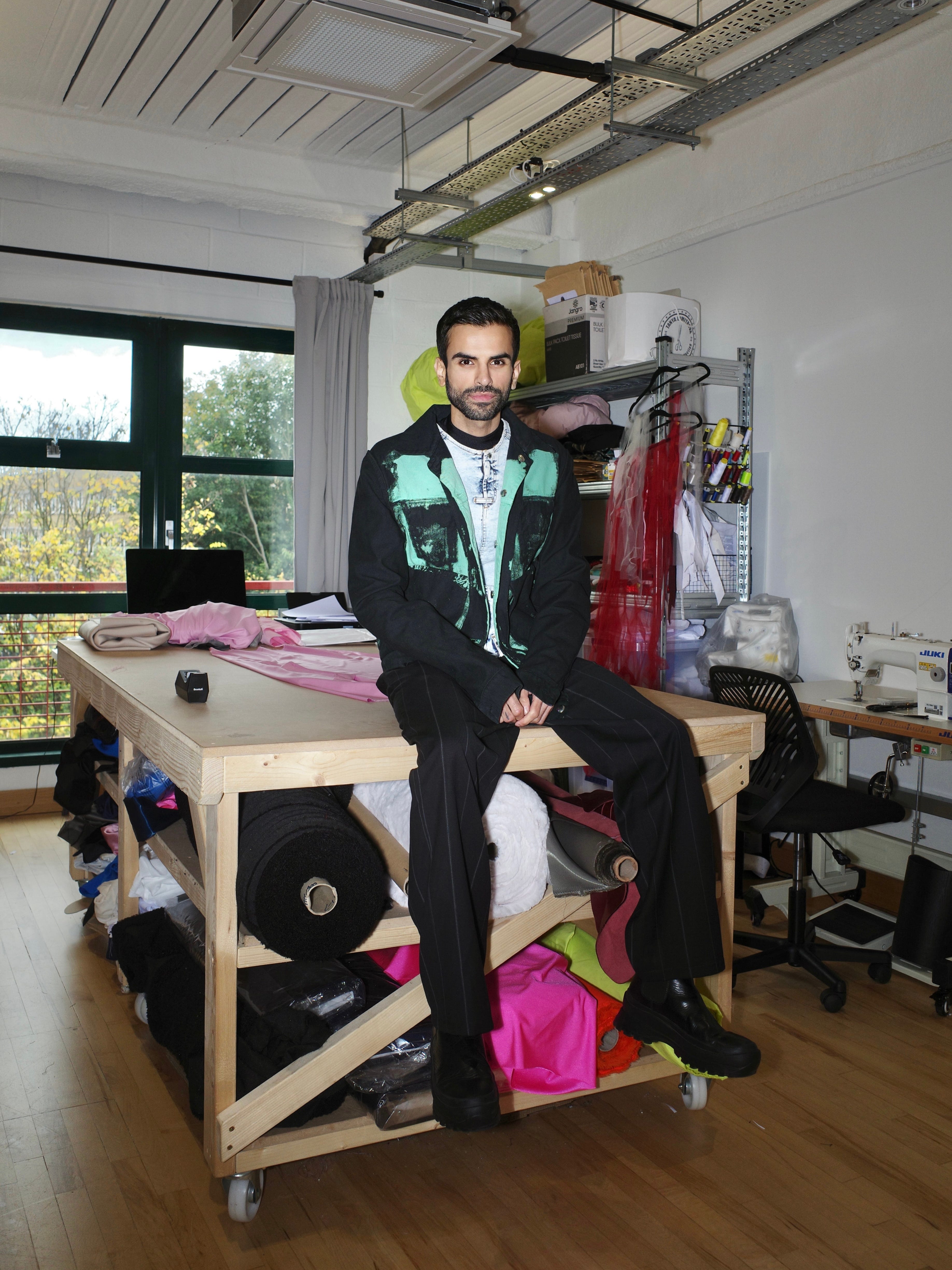
It’s a happy auspice for me to begin this new year with Ziyad Buainain. I’ve had an internet crush on his label for some time now, and used this platform as an opportunity to learn more. And not only did I fall further in love with his impassioned, intelligent designs, but I found a friend in his cadent pursuit of honesty within both himself and fashion.
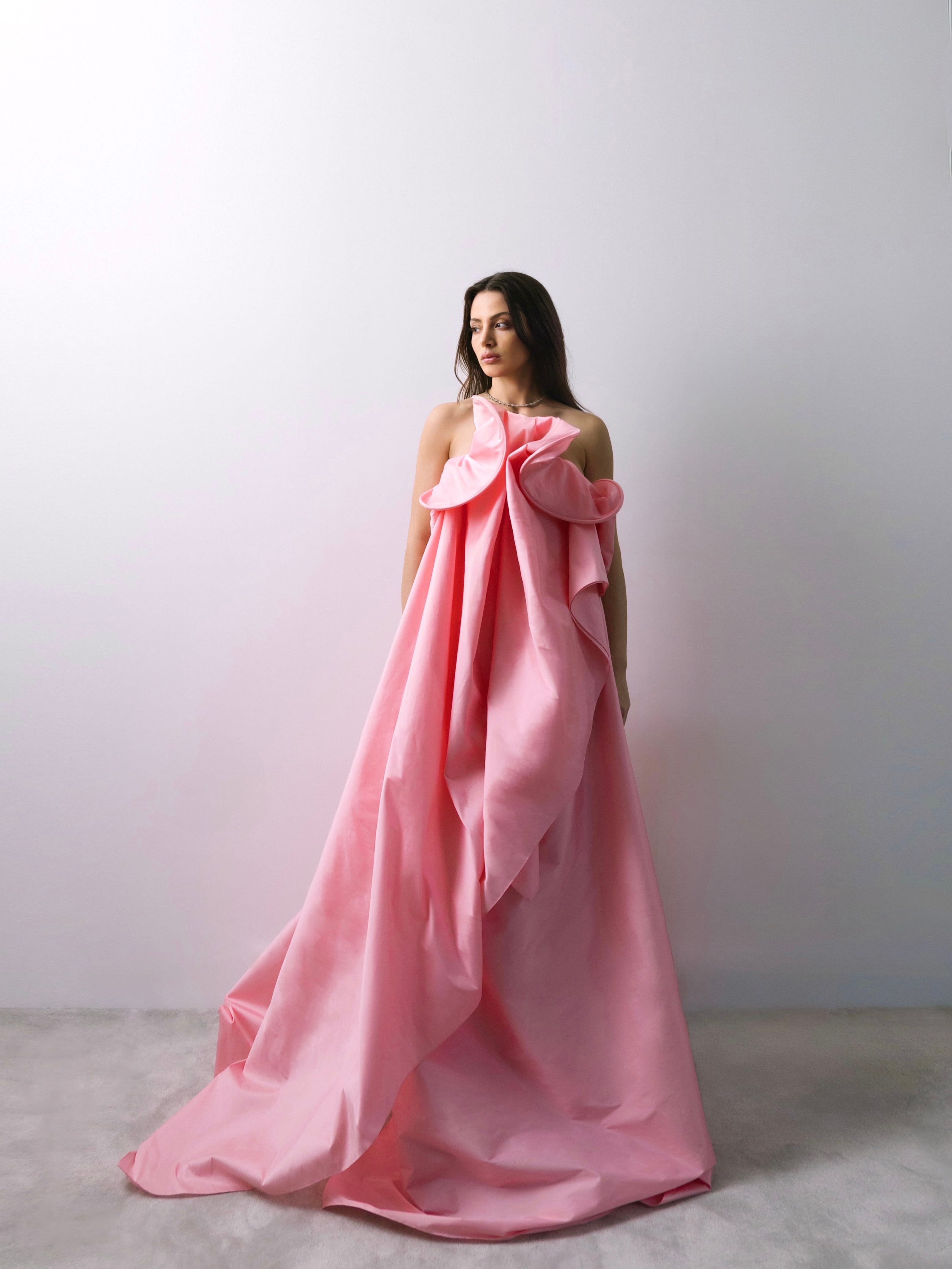
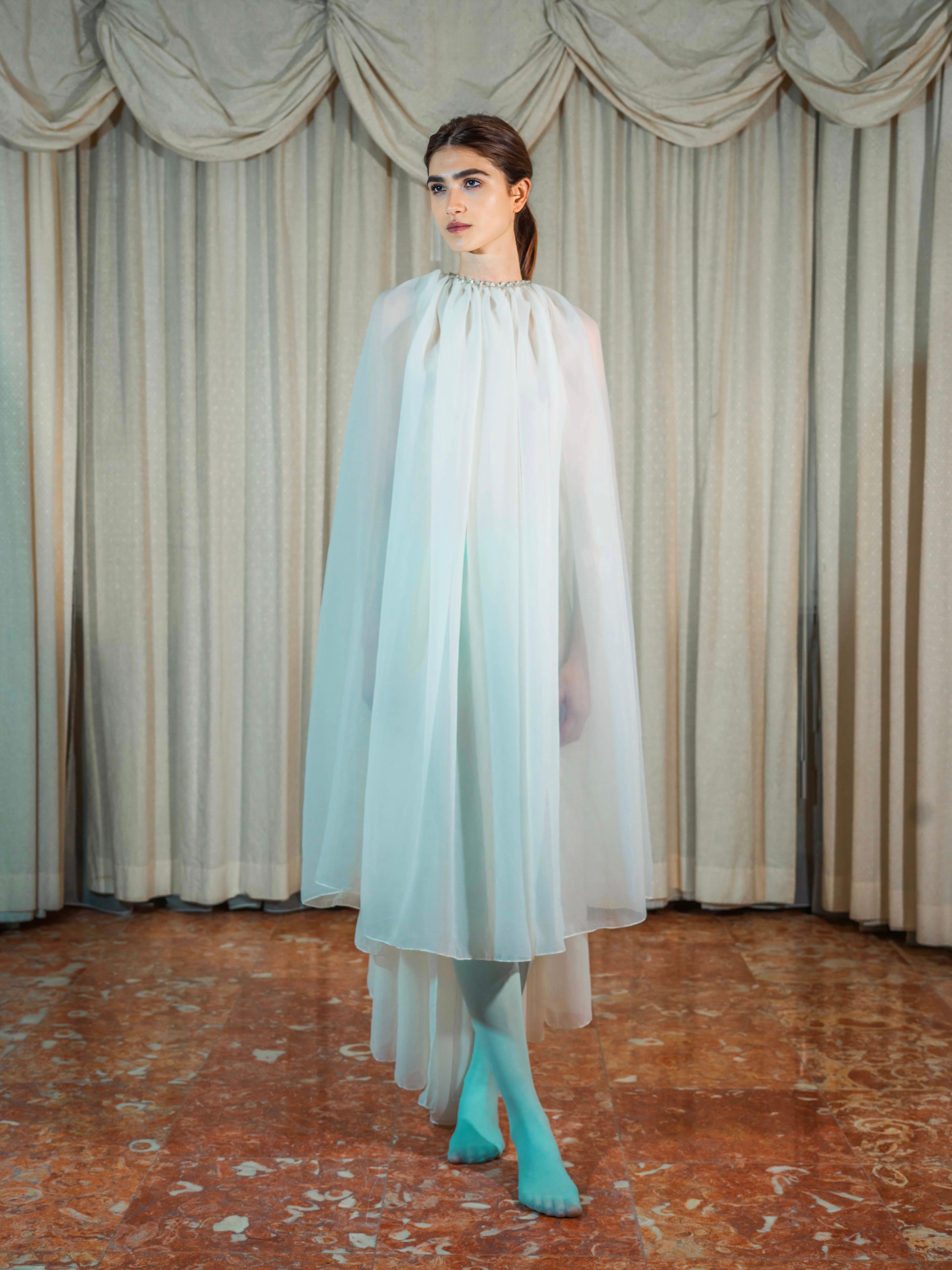
If design, at its etymological root, means to mark something out with intention, then Ziyad is its guardian. A specialist in eveningwear, his gowns tackle sustainability 360°, never shying away from the awkward interface with commerciality in which so many labels struggle. For his clothes can be manipulated—effortlessly, elegantly—in such a way that you can make several looks from a single garment. Each with only slight echoes of the others; all encouraging imagination.
In between this interview and its publication, Ziyad won Fashion Trust Arabia’s Eveningwear Prize and was featured in the Dazed MENA 100 list. It’s safe to say that you’re in for a treat.
Colour, Memory, Emotional Truth
I was born in Saudi Arabia, and my parents are both Saudi, but when I was about five, we moved to Tokyo. My brother and I started school there: two little Saudi boys in an all-boys Catholic school in Tokyo. It doesn’t really get more random than that.
I think that was where I started to develop my appreciation for art, and for things that are a bit more obscure, a bit more surreal. Growing up there, you were surrounded by these kooky, quirky TV shows—everything was so colourful, a bit crazy, just very different. And I think that opened something up for me.
My mum was also a huge influence. Before Tokyo, and then again when we moved back to Saudi Arabia, she owned a multi-brand boutique in Al Khobar, in the Eastern Province. It’s not one of the main cities people usually talk about—it’s closer to Bahrain, Kuwait, the Emirates—but she was bringing in very daring things at a time when things were much more conservative.
She loved very unconventional pieces. Galliano, Moschino, short dresses, things that were quite sexy. She dressed like that herself too—she was quite rebellious in how she dressed, especially for that context. And it was really inspiring to grow up around that. She used to take me on buying trips with her, to showrooms and stock houses, and I remember sitting in her shop, going through garments, looking at how they were made, touching the fabrics. That was when I thought: this is it.
I even had a little sewing machine as a kid. I tried to make things. Everything was wrong—the seams were bad, nothing fit—but I was trying anyway.
If I’d always wanted to do fashion, it wasn’t easy to talk about. It just wasn’t really a thing for men where I grew up. So I didn’t push it: I studied visual communication, then business, and I worked for a corporate company for a couple of years doing executive office management—choosing interiors and artwork for executive buildings. It was the most creative role you could have in that environment, but I was bored. I knew it wasn’t what I wanted.
Eventually, I just put my foot down. I enrolled myself at Marangoni in Milan, did an intensive fashion design programme, then a Master’s in womenswear. After that I moved to London, worked briefly, and then Covid hit. I was alone in London, designing in isolation—and that’s when I started working on my own collection.
Sobriety, Survival, and Self-Authorship
Fashion became an outlet for my stories. Especially my first collection, which was deeply tied to my sobriety. I stopped drinking in 2019, and I wanted to tell that story through clothes. I merged it with visual references that had always stayed with me—like House, the 1977 Japanese surrealist horror film by Nobuhiko Obayashi. It’s surreal, absurd, visually intense. I used those visuals to express what addiction felt like: being trapped, disoriented, on fire. And then the later part of the collection moves toward hope—toward realising you need help, and that it’s possible to get out.
One of the prints came from a really specific moment: I went to a wedding in Rome shortly after getting sober. I almost didn’t go—I knew how those environments used to be for me. But I went, didn’t drink, felt safe, and on the flight home I took a photo of the sunset from the plane window. I remember feeling so proud of myself. Later, when I was working on the collection, I found that image on my phone and knew it had to be part of the story. I motion-blurred it, stacked the colours, and printed it onto a dress shaped like sun rays. It became a symbol of survival.
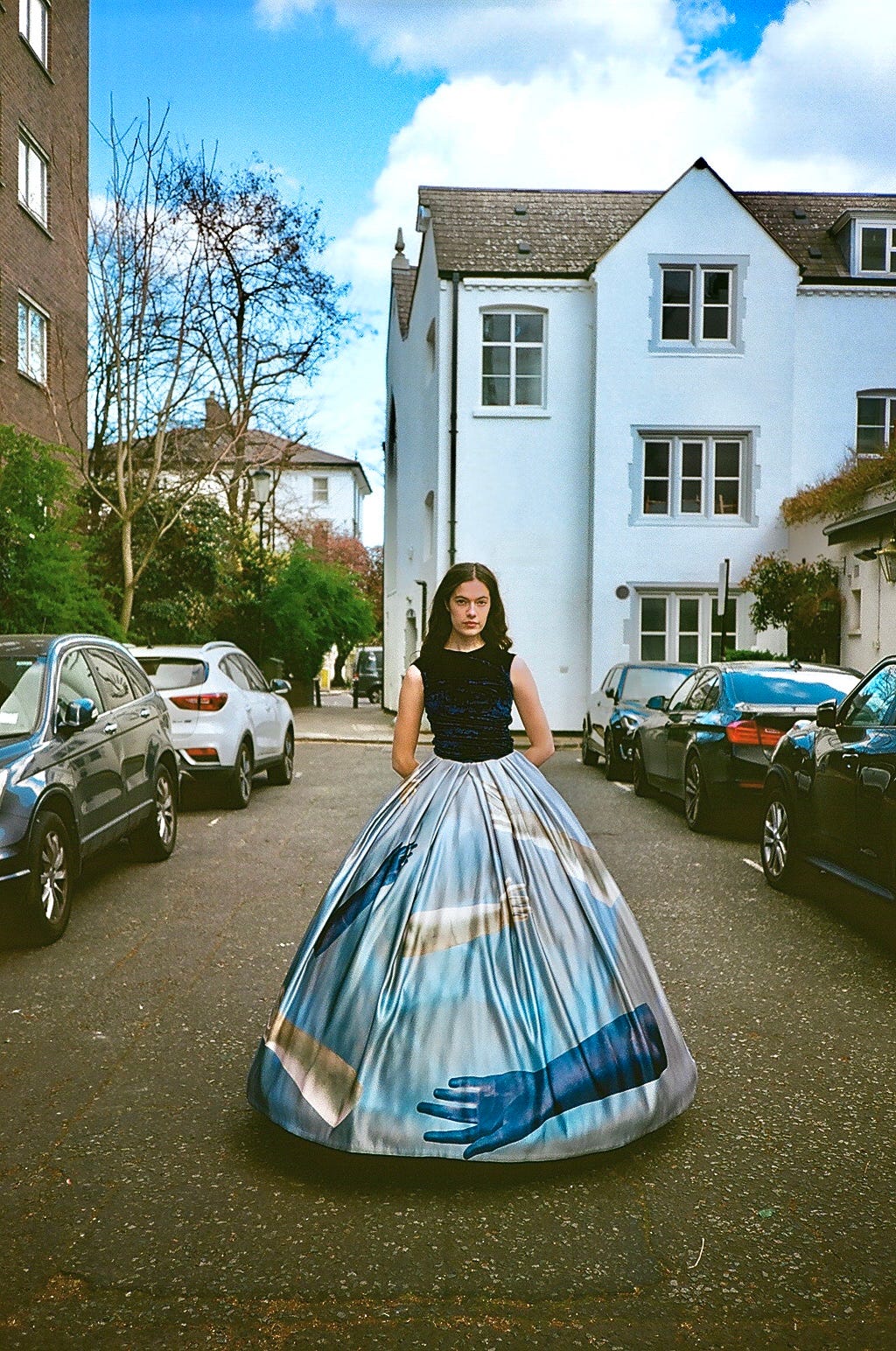
There’s also a skirt covered in reaching hands—that was about asking for help, about that moment where you realise you can’t do it alone. A burning chandelier print—taken from House—represented addiction as being stuck inside a house on fire, where everything you touch still burns you. Addiction doesn’t always look how people imagine it. You can have a beautiful life on the outside and still be on fire inside.
Sobriety changed everything for me. I honestly believe that starting my own brand saved my life. I knew I couldn’t build anything meaningful while drinking. It kept me stagnant, foggy, disconnected from myself. Being sober forced me into situations without a crutch, and over time that gave me confidence. Real confidence. It also clarified relationships. You start to see which connections are real, and which only existed for a good time. It’s painful, but it brings quality into your life.
Transformative Design & Responsible Creation
Colour has always been really important to me. I associate colours with feelings very instinctively. I didn’t formally study painting, but I was always in the art room at school. During lunch, after school—I was always there making things. My art teacher even created an award just to give to me. She let me paint the door of her classroom. That freedom meant a lot.
Even as a kid, it was there. In Boy Scouts in Japan, we had to carve little toy cars for a race. Everyone made practical cars. I decorated mine. I won an award for the most interesting design. Looking back, it’s funny—but it makes sense.
I chose womenswear because I wanted to explore elegance without aggression. I like that balance—things that take up space, but softly. And I also wanted to show a different side of Middle Eastern design. There’s this very dated, Orientalist idea of what Arab designers are supposed to make. Embroidery, tradition, modesty. It’s beautiful, but it’s not the whole story. I’ve spent my life being told I’m not enough of something—not Saudi enough, not Western enough, not English enough. At some point you stop trying to win. You just decide to be your own thing.
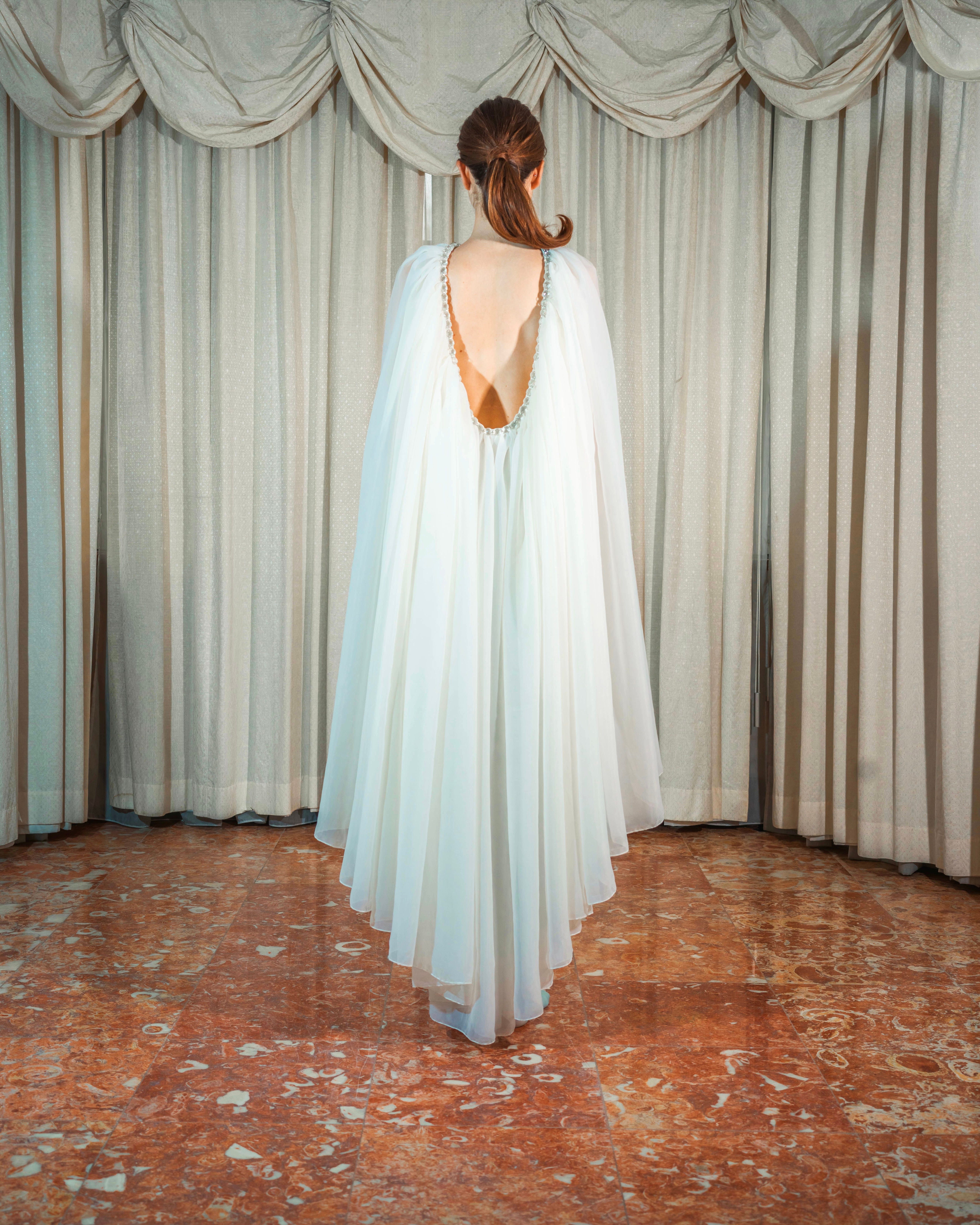
Sustainability is personal for me. I grew up in a household where nothing was wasted. When I started the brand, I committed to made-to-order pieces, using deadstock and recycled fabrics, and reusing leftovers as linings. Seeing how much fabric luxury houses waste is honestly shocking. I just don’t want to contribute to environmental destruction if I can avoid it.
But sustainability is also about behaviour. I was tired of hearing people say they couldn’t wear something again because it had been photographed. So, I design pieces that transform: dresses that unzip into tops, skirts that change shape, garments with multiple lives. One piece can be worn five different ways. I love seeing how people interpret them, often in ways I never expected.
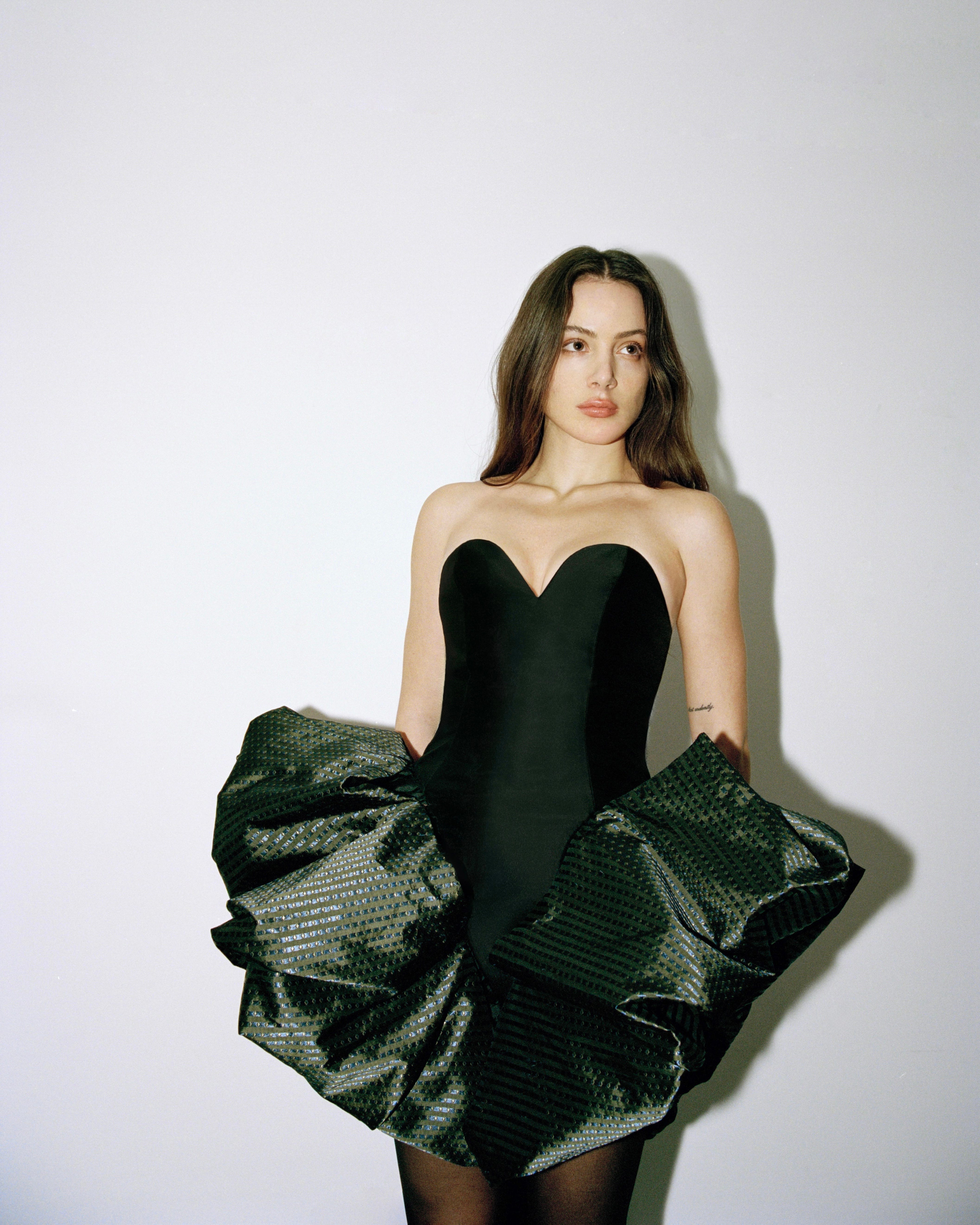
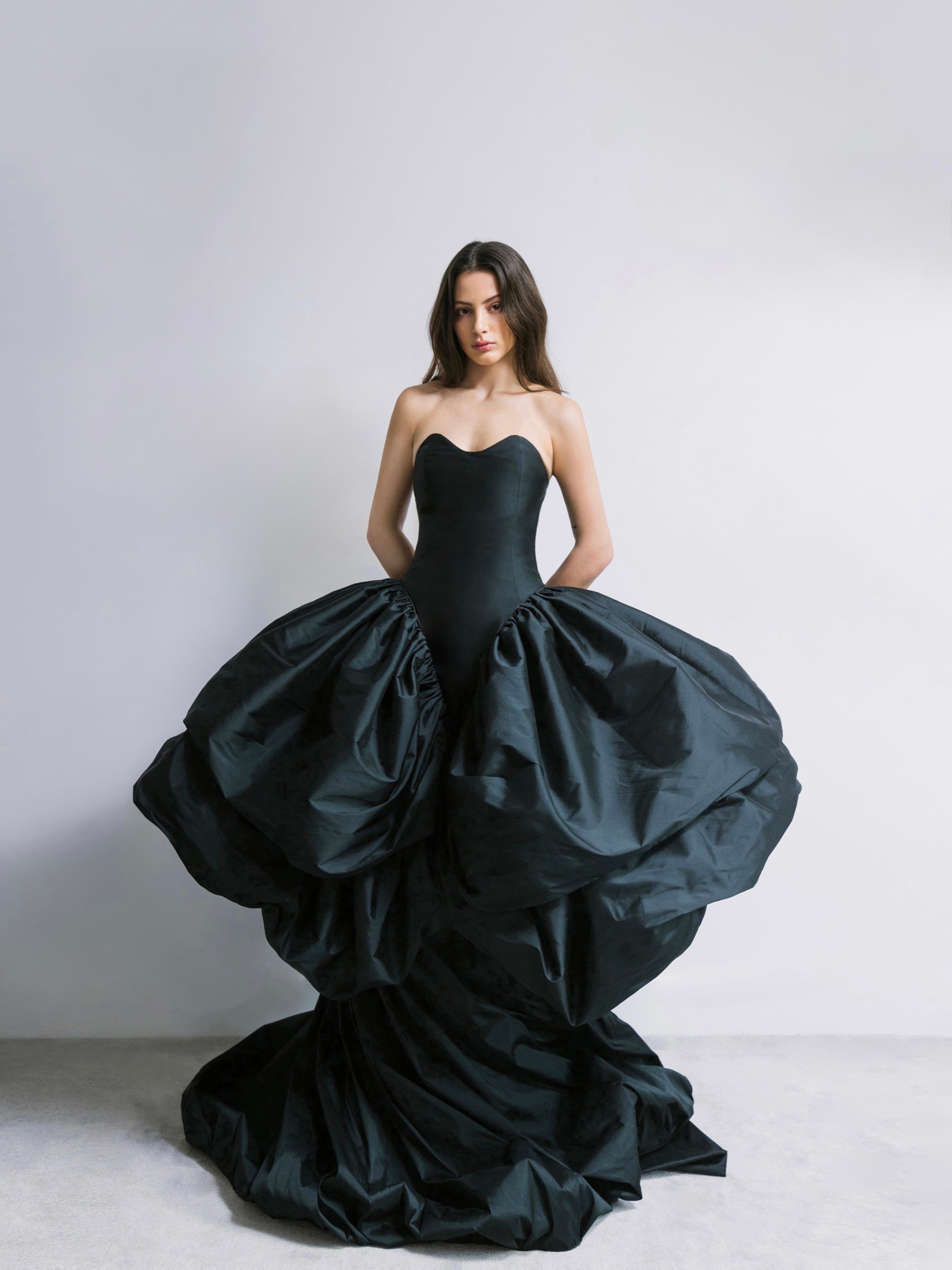
Personal style matters to me. I’m bored of trends. Before social media, style felt like a surprise. Now everything feels copied, literal. Clothes should unlock something in you. They should bring out a part of your personality you haven’t visited in a while. When someone wears my clothes, I want them to feel special. Inspired. Like they’ve unlocked something in themselves.
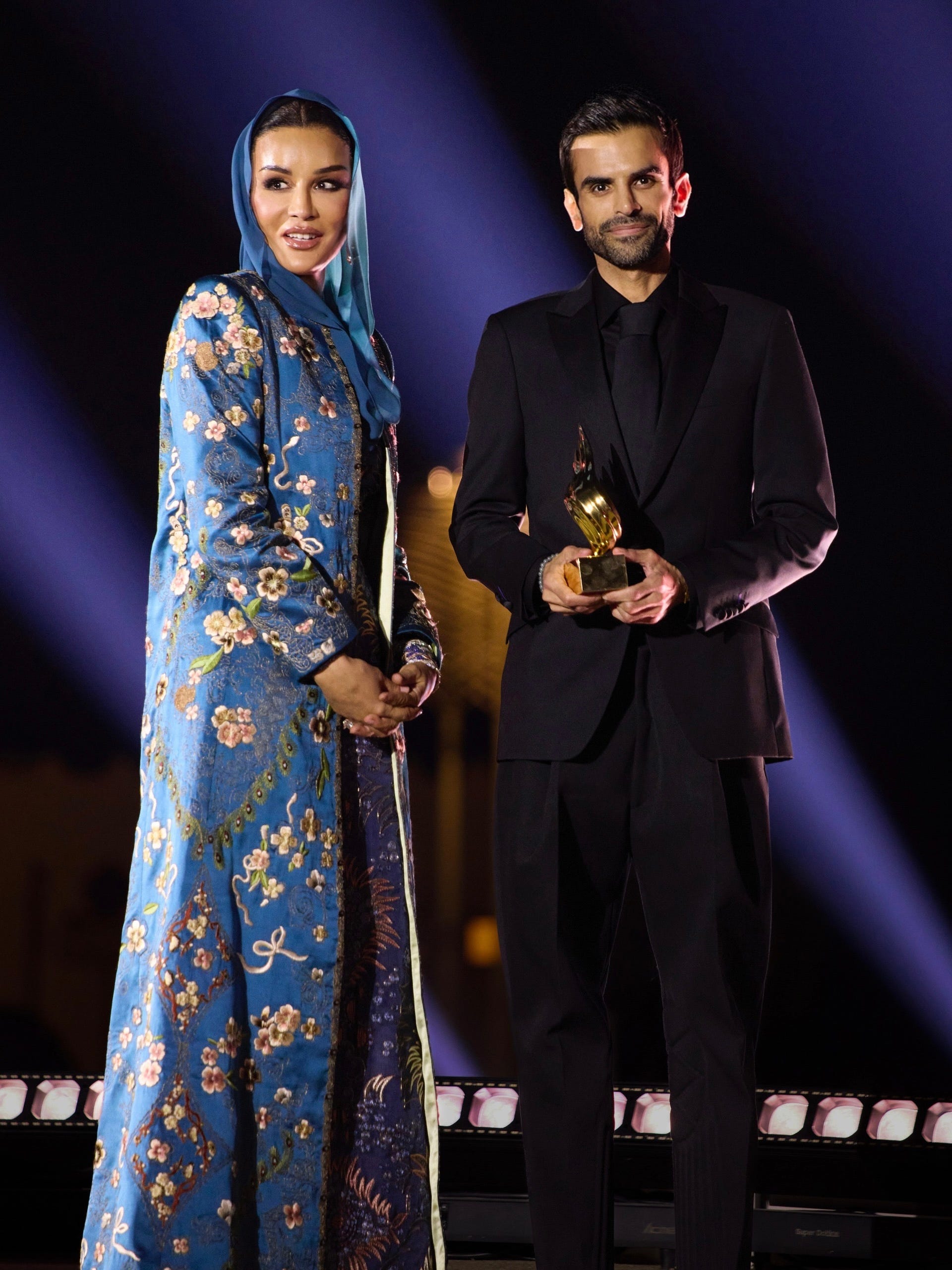
Ziyad’s words to live by: I always tell young creatives to hold tightly to their own voice. In this industry it is very easy to be pulled in different directions, or to feel pressured to fit into someone else’s idea of what you should be. Your individuality is the one thing that cannot be replicated, so protect it and let it guide you.
Another principle I live by is to never let the industry harden you. Fashion can be challenging, competitive, and sometimes unforgiving, but it can also be incredibly beautiful when you approach it with openness and curiosity. Stay kind, stay receptive, and keep your heart connected to why you started. Bitterness only dims your creativity, while integrity keeps it alive.
Surround yourself with people who give you energy and inspire you. The right people will sharpen your perspective, nurture your confidence, and remind you of your worth on the days you forget it.
And finally, trust your journey. There will be moments of doubt and moments of clarity, and both are necessary. If you stay true to your identity, honour your craft, and keep your spirit open, you will find that your path unfolds exactly as it should.
Pass it on—3 creatives Ziyad thinks are worth our attention:
Alaa Alaradi: The FTA Franca Sozzani Debut Talent winner 2025. Alaa is insanely talented, intelligent and kind, @alaaalaradii
Mona Haider: One of the founders of HUE - an inclusive skincare brand. She's a hard worker with a gorgeous vision and a beautiful mind, @plusmona @madeforhue
Polina Osipova: A multidisciplinary artist. Her work is stunning, inspiring and thoughtful. She's also an angel. @polinatammi
Thank you, Ziyad, for allowing us to walk down memory lane with you. May your words be a reminder of what intelligent design looks like—and the pause and self-inquiry required to get there.
Thread by thread, these voices are reweaving what fashion can mean across cultures—binding us, artfully, into a global fabric of care. If you enjoyed this interview, consider subscribing—or buy me a coffee—to support more conversations like this.