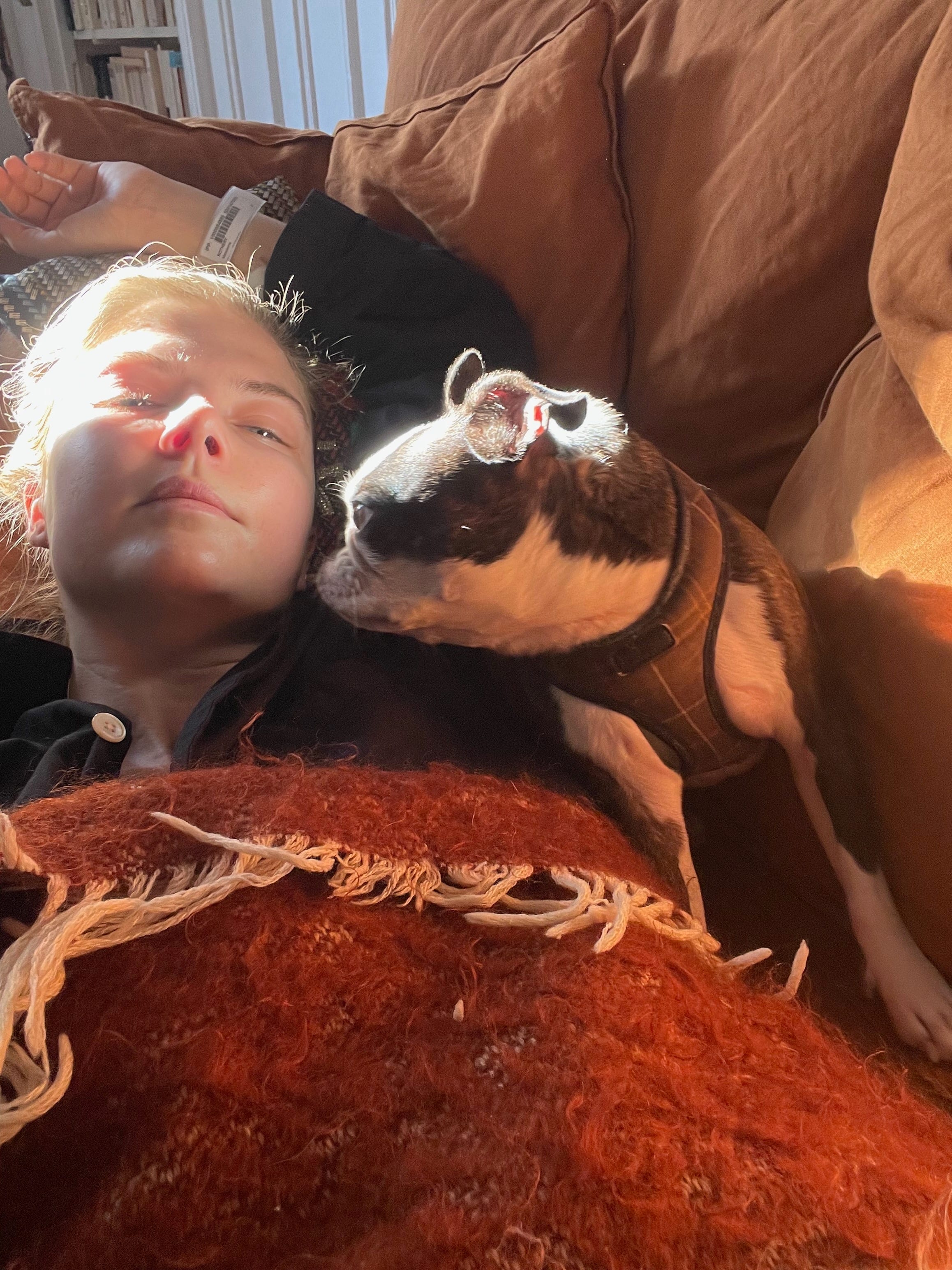
I’m back. Although later than I’d planned, and yet with rather more to say for myself than usual… but back, and I’m genuinely glad to be here.
My silence has been endometriosis-shaped, as some of you will have guessed. Another surgery—six and a half hours this time—and then the slow, unglamorous business of recovery, which, unsurprisingly, does not fit into the fury of the fashion calendar. I threw myself back into the shows barely a month post-op, which was either brave or foolish, and I’m still not entirely sure which.
The small laparoscopic scars stitched across my abdomen looked almost inconsequential from the outside: a laparoscopy is routinely described as “minimally invasive,” which is technically accurate and experientially absurd. There is very little minimal about the swelling, the pain, the slow interior reconstruction of a body that has been, however carefully, taken apart and put back together.
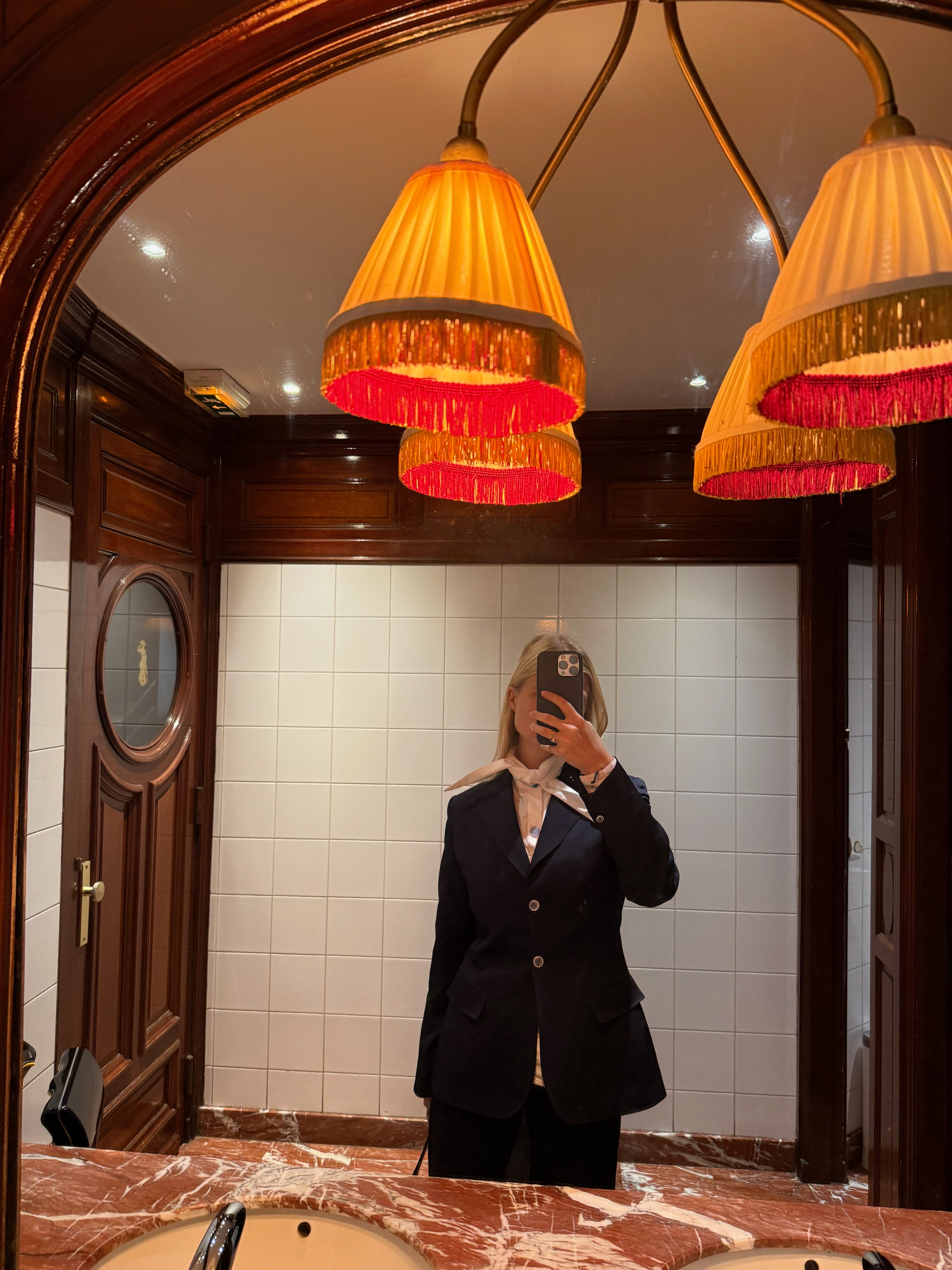
(I wrote about my experience with endometriosis and fashion more completely for Vogue France, to mark International Endometriosis Awareness Month. If you want to read an English translation of the article, I am more than happy to share.)
Moving through the frows of shows, still healing, I became acutely aware of my body’s hidden dimensionality—of the radical gap between what it showed and what it carried. And then I looked around—and that was not at all what was reflected back at me—if there is even much to be reflected back at all.
Bodies are growing more uniform: more optimised, more convergent, more legible…
I want to be careful here, because the medical uses of newer interventions are real and the pressures that shape those choices are enormous—this is not a verdict on anyone. But something is narrowing—and it’s not just the range of sizes buyers are ordering—it made me think about what we lose when beauty becomes standardised. When the strange and asymmetrical is edited out: beauty as standard achieved.
And it is the same gesture that troubles me in fashion more broadly: the treatment of the body as image rather than subject. The literal closing of the space between flesh and life and garment.
The best thing fashion has ever done is leave space—not just in the cut, but in the conversation. That interstice between body and garment where the self actually lives, where hunger and pain and pleasure reside, and the simple irreducible fact of being a person rather than an image.
I wrote about this for Vogue Japan just recently, in relation to the Met Gala and the Costume Institute’s exhibition on the body, tracing a lineage of designers for whom the relationship between body and garment was always a dialogue rather than a decree. From Schiaparelli’s 1938 skeleton dress—not mere decoration placed upon a body but a question directed at one (!): What is this thing we keep dressing? What lies beneath?—to Kawakubo’s Body Meets Dress, Dress Meets Body, with its kidney-shaped pillows displacing volume to all the wrong places, insisting on a body that refused its expected shape. To Satoshi Kondo at Issey Miyake, whose most recent collection began with the question: what if a garment had emotions?—working with a dancer, watching what happened in the space between body and cloth, beginning by wanting to give the garment emotions and ending up wanting to soften the thinking of the wearer. The space working in both directions, as it always has.
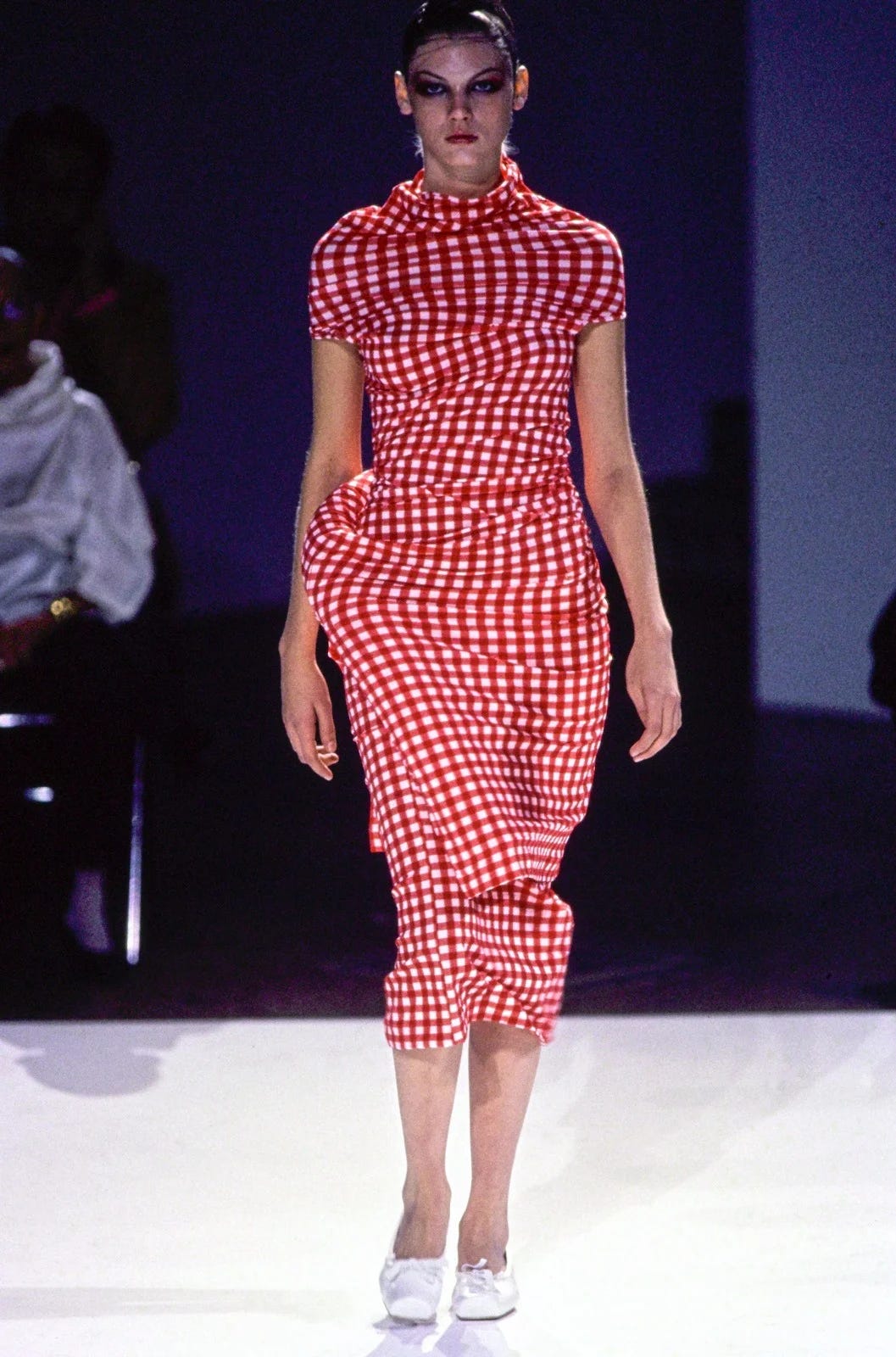
I was walking and talking with Adrian Joffe—President of Comme des Garçons and Dover Street Market (and Rei Kawakubo’s husband)—not long after the Gala, and we kept returning to the same observation: that remarkably, given the exhibition’s entire theme, not one guest had worn Comme. Rei Kawakubo, who arguably did more than any living designer to interrogate the relationship between body and garment, was entirely absent from the red carpet. Instead, most guests seemed to have opted for the idea of the body as hanger—draping themselves in embroidered, jewelled recreations of art history’s favourite paintings. Wearable art, technically. But where was the convergence? Where was the body in the conversation?
Every morning when I get dressed, I think about this meeting point (and perhaps its my endometriosis that forces it). The invisible gap between my life and that of the designer—their intelligence, their philosophy, the hands that made the thing—and my own body, my own day, my own becoming. The best designers leave room for this convergence. They don’t impose a narrative so totalising that you disappear into it, reduced to a surface carrying an image. They offer something and trust you to bring yourself to it; the garment and the body author something together that neither could alone.
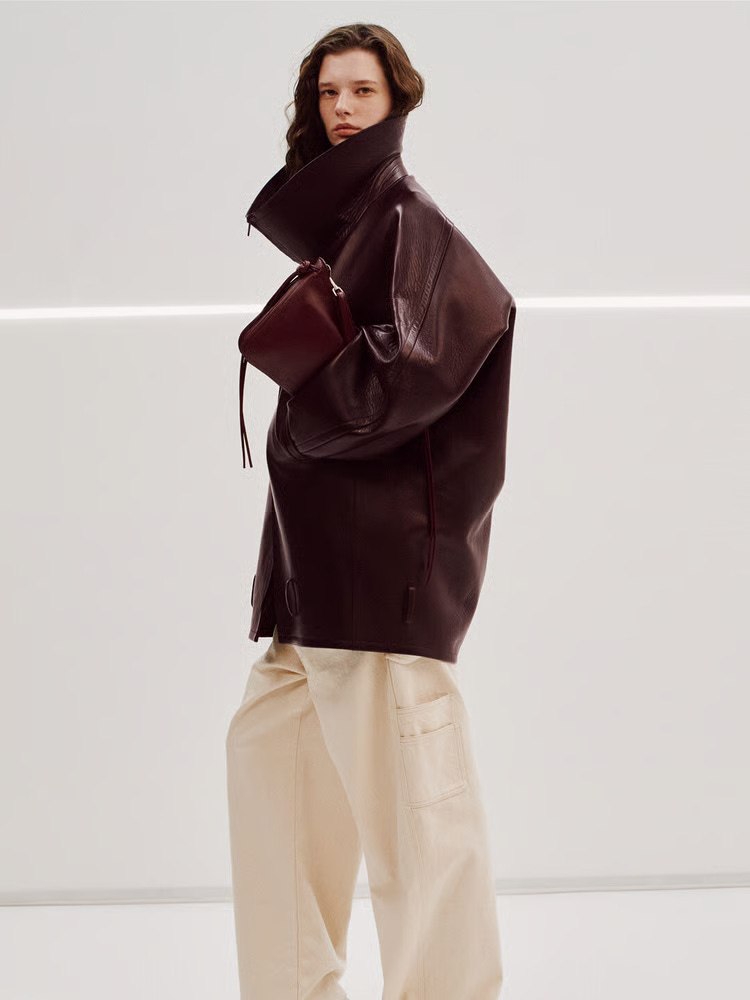
Phoebe Philo understands this. Her clothes ask very little of the body wearing them—just to move, to think, to take up space without apology. Miuccia Prada has spent four decades refusing to let the garment eclipse the person, describing fashion as “a small thing,” something done in the morning before the real business of living begins. The life matters more than the look. Miyake’s Pleats Please line—incomplete until a body animates it, designed for motion rather than the static image—is a philosophy as much as a garment. If he wrote the composition, the body is the instrument.
Space for self-authorship, I guess you could call it. And that’s what the best fashion has always offered.
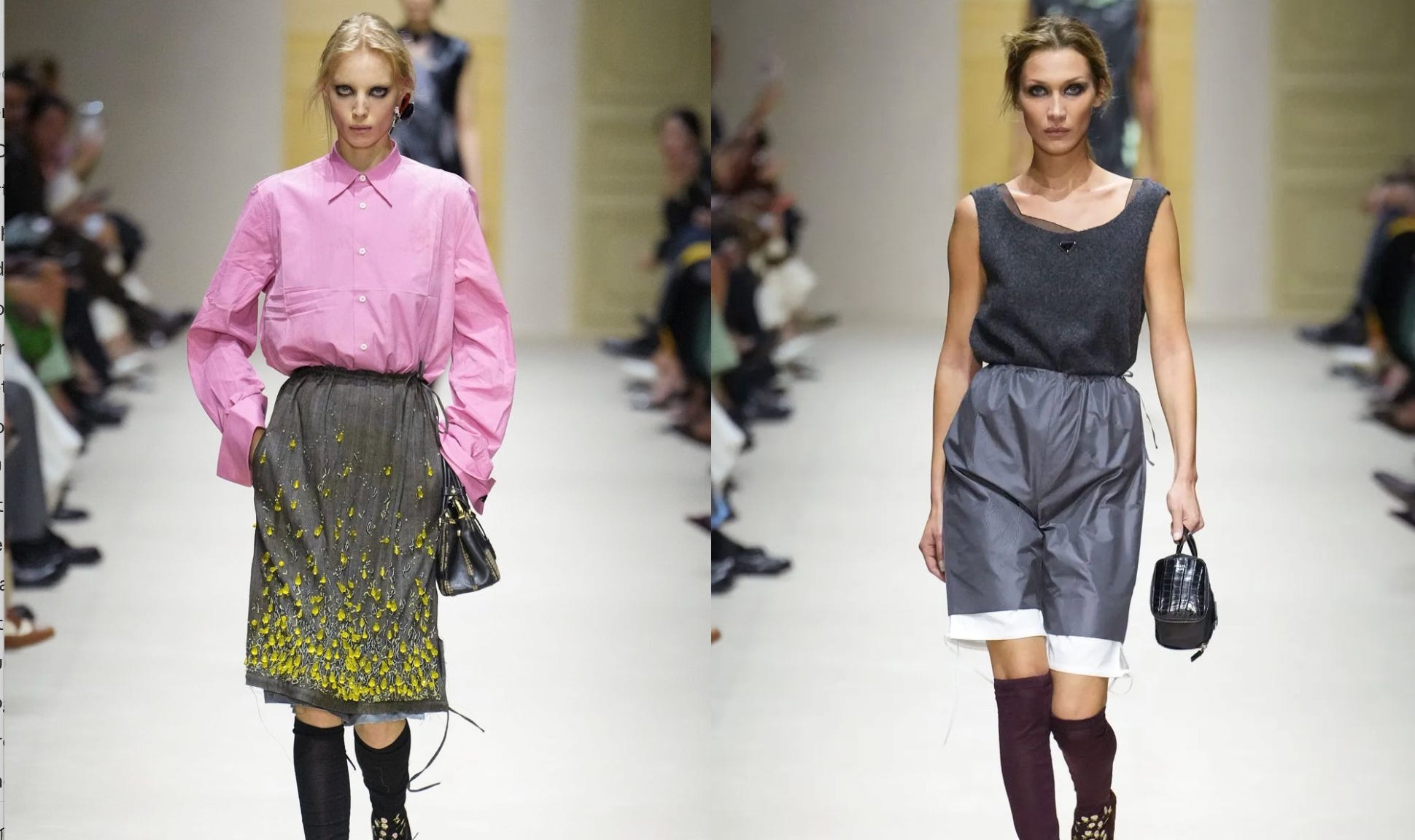
Care—and I mean real care, the kind that moves outward rather than sealing inward—requires the same spaciousness. We have turned self-care into self-optimisation, redirected ancient practices of collective tending toward the individual alone, carved life into clean binaries: healthy and sick, able and disabled, self and other. When really, life happens in the grey, in the mess—in the complex, fleshy, porous, inconvenient middle.
To feel beyond the edges of your own skin is what the best clothes make possible. By leaving room for it to be fully, messily, dimensionally itself. But spaciousness is a practice, and not an aesthetic. A daily decision to remain dimensional—to allow the body its full reality, the feelings their full range, the beauty its full strangeness. And to resist the flattening.
I came back from surgery with scars I could count and healing I could not see. Still somewhere in the middle of it, I am still here, still learning, still choosing, some days more successfully than others, to stay in the space rather than compress out of it.
As I’ve been writing this, I can’t stop thinking of the book of my childhood and adolescence, The Catcher in the Rye. Just as Holden misquotes Robert Burns, I hope you’ll allow me to do the same. For all I keep hearing is: if a body catch a body (most likely an earworm riffed off the name of Kawakubo’s 1997 collection).
That, to me, is what the best fashion does. Body catching body. The designer’s life meeting yours in the space between cloth and skin, with enough room for both to remain fully themselves. We are all, as Ram Dass reminds us, just walking each other home. And clothes, at their best, are part of how we do that.