

Jen-Fang Shueh of @jennyfax.official
I remember the first time I saw Jen’s work, in an exhibition at Antwerp’s MoMu. It really tickled me pink: there was something so clever and wry about it—not in a loud, slogan-on-a-T-shirt way, but in the way it seemed to sit somewhere between fashion and real life, with women’s bodies as its starting point rather than something to be corrected or resolved. I knew then and there that Jen was my girl.
At the time, I couldn’t quite articulate why it felt so refreshing—but coming off the back of three months of fashion weeks, it’s now impossible to ignore. The spectacle of dress is increasingly feeling detached: beautiful clothes, often made under inhuman pressure, shown on bodies that are steadily being whittled down by trends like Ozempic and an ever-narrowing idea of perfection. Against this circus, Jenny Fax offers something else—something closer to life.
This is why I always find her presentations during Paris Fashion Week a breath of fresh air—god forbid we laugh during FW! They are colourful living tableaux: women as they are—slightly exaggerated, sometimes humorous, never, ever reduced or restrained. Outside, the scene is just as telling—queues around the corner, die-hard fans dressed head-to-toe in Jenny Fax, waiting to enter her world. It’s the kind of following that can’t be manufactured, especially not for an independent brand.
What emerges from our conversation below is a designer who didn’t arrive through fashion’s usual systems, but from somewhere more intuitive and observant. Raised far from any fashion capital, Jen built her practice through looking—at people, at memory, at the small details of daily life. In doing so, she has created an iconic aesthetic—and a community that extends far beyond the act of buying clothes.
There is a lot to be learned from Jen’s wisdom and talent. For Jenny Fax isn’t about speed or visibility; it’s about building slowly: through connection, participation, and a way of seeing that remains in touch with the world it draws from.
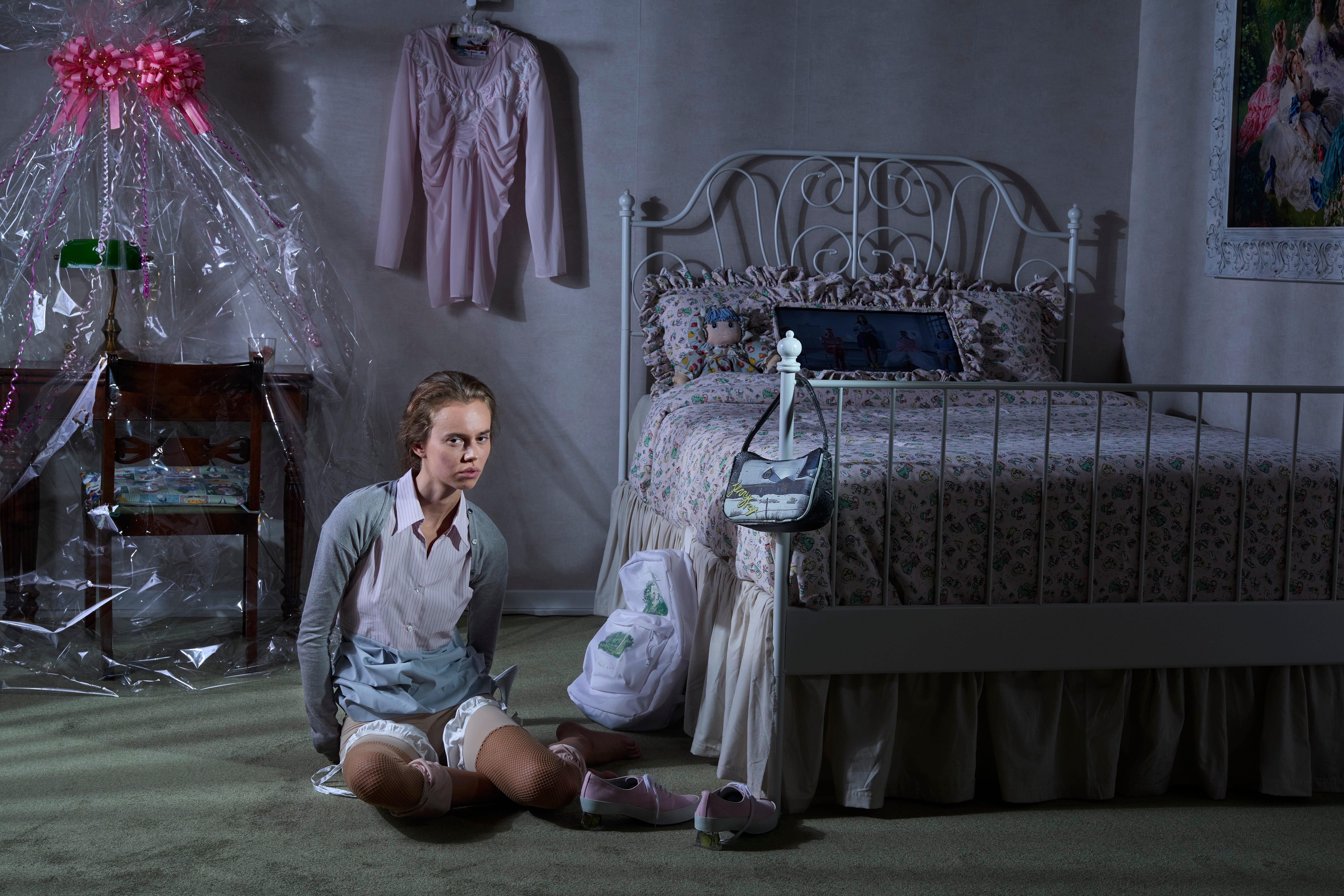
Starting from a Distance
I started Jenny Fax in 2012. It’s been a long journey, but in the end it always comes back to something very simple: you just have to do what you want to do.
I grew up in Taiwan in a big family. We were four children, and I was the second. My mum had to be very careful with money, so we couldn’t always have clothes or things like that. I think that’s where it started—I really wanted to dress up, to change things, but I couldn’t.
At that time, there was no internet, and Taiwan wasn’t a fashion capital. We didn’t really know anything about fashion. I remember thinking there was only one Fashion Week. Everything felt very far away. But I think that distance made me more curious. When you don’t have access, you imagine more.
When I was 19, I went to Paris, then Antwerp and Brussels. I didn’t really finish school. For a long time, I would take the train there, but I wouldn’t go in—I would just look at the school and go back. It sounds strange, but I think I was learning in a different way.
For me, education depends on the person. School gives you rules and limits—and that can be good. But taking a longer way, living, travelling, seeing things—that also shapes you.
I don’t think there is one correct path.
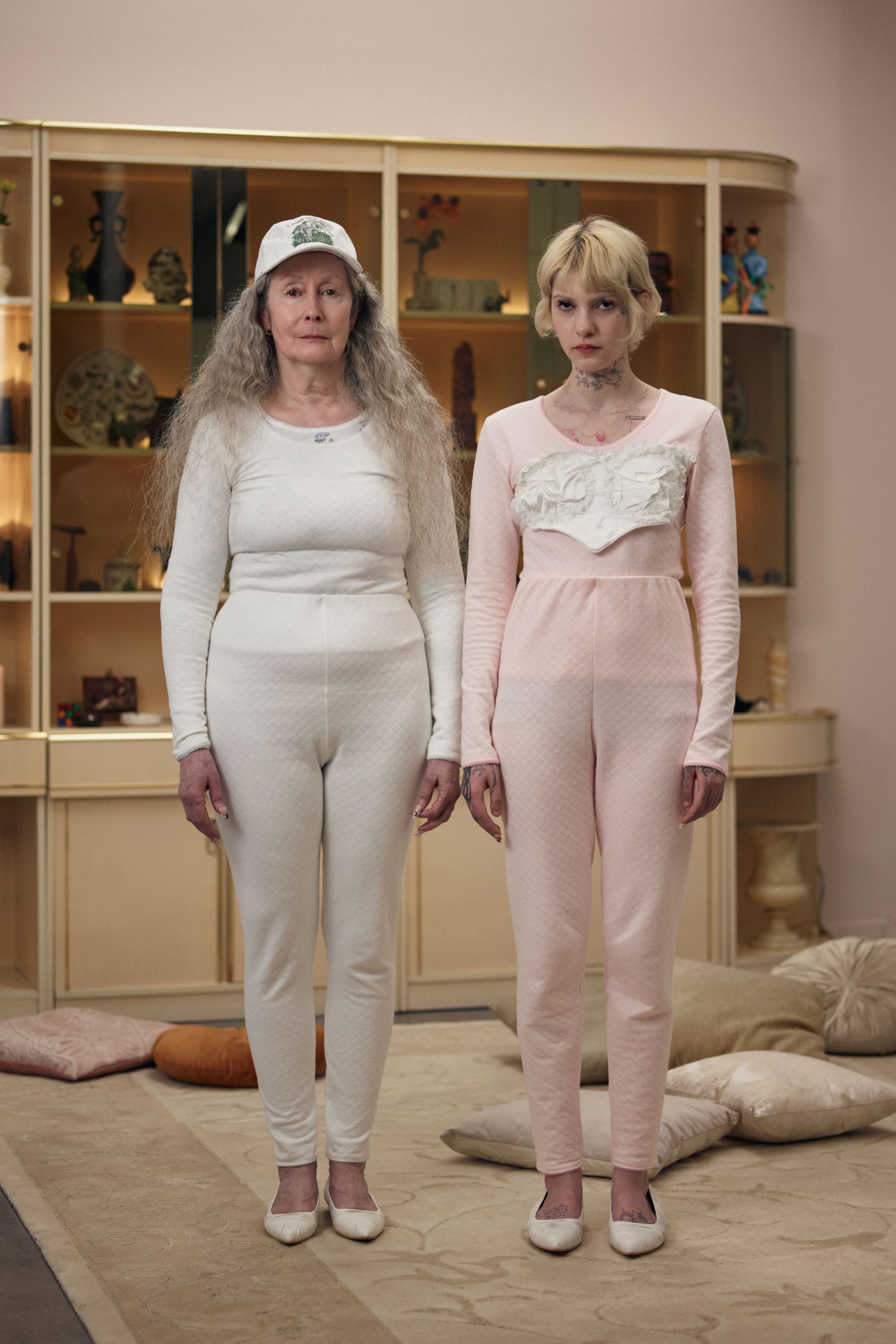
Memory, Girlhood, and What’s Already There
My work always comes from what I already have. I don’t have a big concept or philosophy each season. I work with memory—childhood, small feelings, things I’ve seen.
Memory is very personal, but when you show it, it can connect to something deeper in other people. That’s why the work can feel both playful and serious at the same time. It can look cute, but there is always something else underneath.
I’m very interested in ordinary women. When I design, I think about people I see in daily life—on the street, in cafés. Those women are more like my muse than an imagined character. I think that is important. Because most people are like this. They are not perfect, and they are not trying to be.
I don’t want to design something that corrects the body. I don’t make corsets. I don’t try to make the body more “perfect.” I think the woman should be as she is. So I look for what goes against the normal rules, and I put that into the clothes. Sometimes it’s something people don’t want to show. Maybe it’s not what people expect to see, but it’s real life.
That’s part of the process—working with what is already there, not trying to change it.
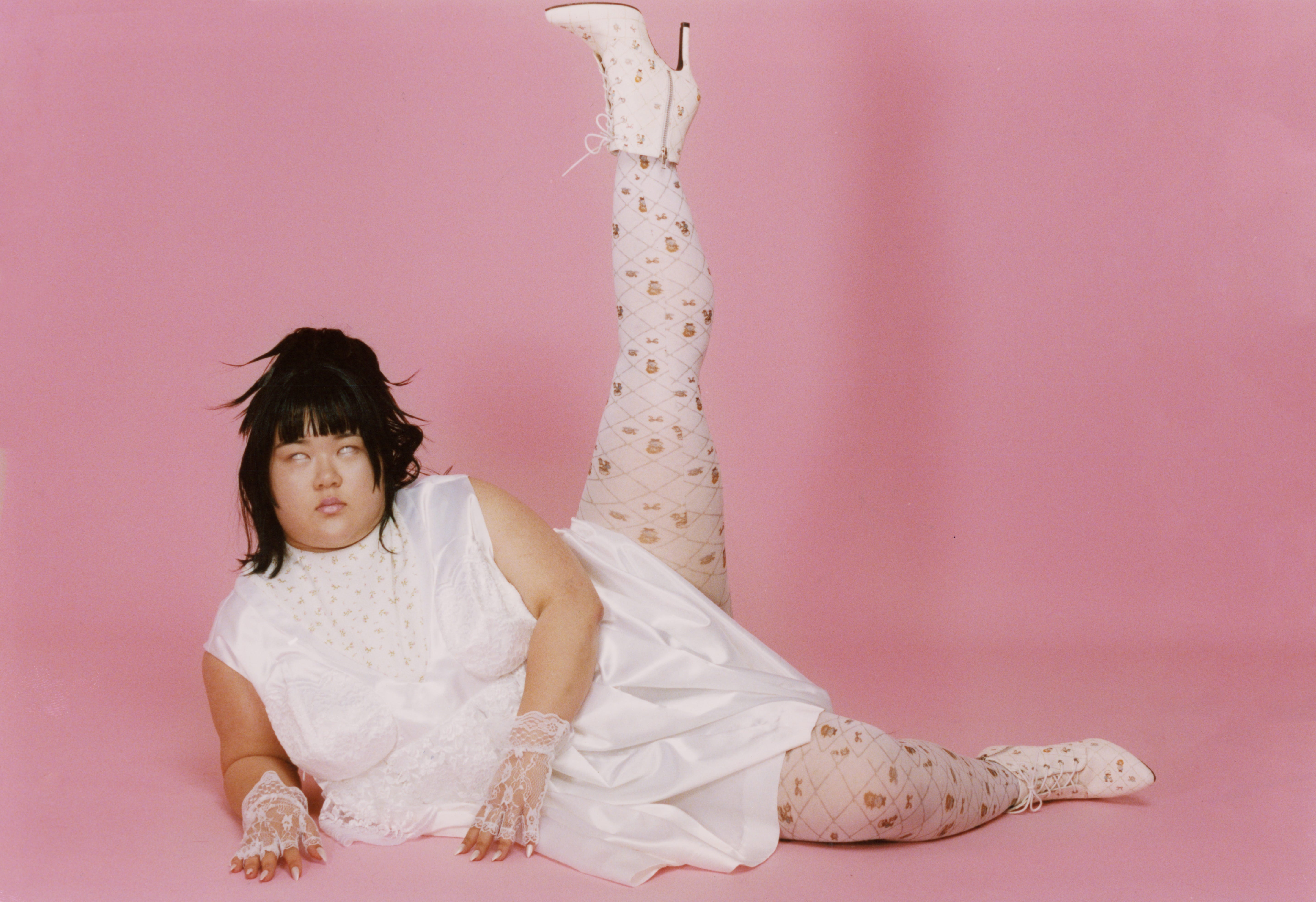
A Little Bit Outside
I moved from Taiwan to Paris, then Belgium, and later to Japan. Each place changed how I see things.
In Europe, people can see you are foreign. In Japan, people think you understand everything, because you look similar, even when you don’t. That was difficult at first.
But I think moving between places gives you a certain position. You are always a little bit outside, even when you are inside.
Maybe that’s where the humour comes from.
It comes from my family, but also from Taiwan. It’s a place with mixed influences, so there is a kind of humour that can be a bit dark, a bit negative, but still funny. You can see something serious, but also something slightly off at the same time.
Growing up in a big family, you also learn to be funny. You want to make people laugh. There are many children, so you feel like you need to do something to be seen.
I think this way of seeing also affects how I design.
In Europe, I think more about shape—something simple, strong, direct. In Japan, it’s more about detail, more layers, more accumulation.
The thinking is the same, but the expression changes. I need both. If I only do one, I get bored.
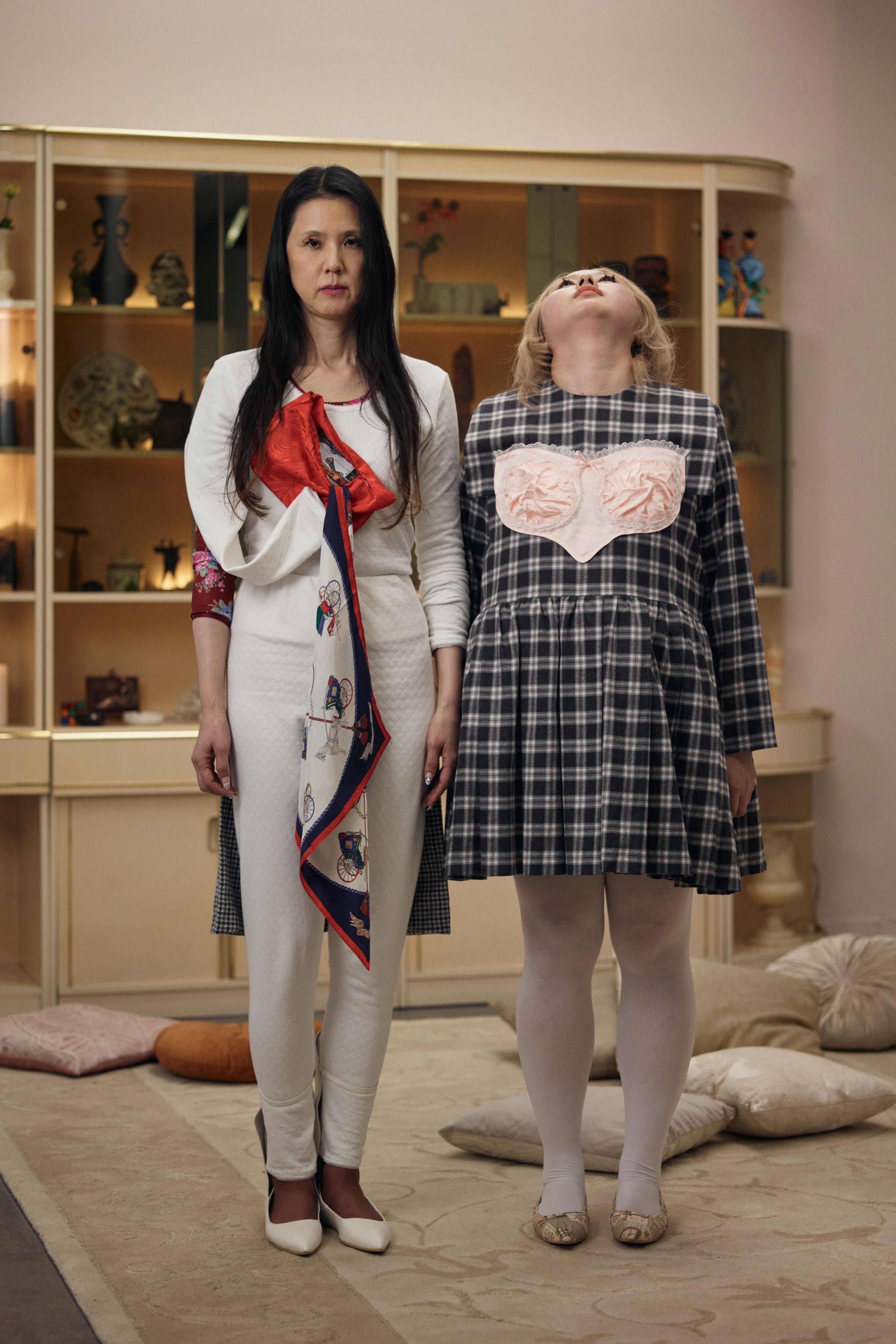
“One Foot in the Grave”
At the beginning, I thought a lot about press—wanting more visibility, more media. I think everyone goes through that. You think that’s what you need. But over time, I realised something else is more important: community.
You need people who really connect with what you do. Not just see it, but feel it, share it, carry it forward. That takes time. But it stays longer than attention.
Sometimes the industry now feels confusing. There are many young creatives who are more like influencers, but they are also making clothes. It’s difficult to understand what that means.
Recently, I opened a small space in Tokyo. I called it One Foot in the Grave as a joke to myself—maybe it was a bit too late to open a store. But it’s not really a shop. It’s more like a space—a physical version of my world. Like Instagram in three dimensions. It’s in a building I always wanted to be in—known more for subculture, animation, secondhand shops. Not really fashion. I think my brand is closer to that than to high fashion spaces like Omotesando.
I’ve also been doing workshops for several years. I like being close to people in a small setting. Sometimes people come and don’t talk for four hours—they just focus on making something. Some of them never come to a show or a presentation. They don’t follow fashion in that way. But they come to the workshop. Some buy clothes, some don’t.
I even have people who work in host clubs come. That surprised me. But maybe they need a different kind of space—to do something with their hands, to be somewhere soft for a while.
It made me realise there are many ways people connect to a brand.It’s not only about buying something. It’s about entering a world.
Fashion is difficult now. There is a lot of pressure. But as an independent designer, I think my responsibility is more simple: I listen to my community; I make what I believe in.
When things get hard, I remind myself: imagine you’re doing a completely different, everyday job. Then I go back to work.
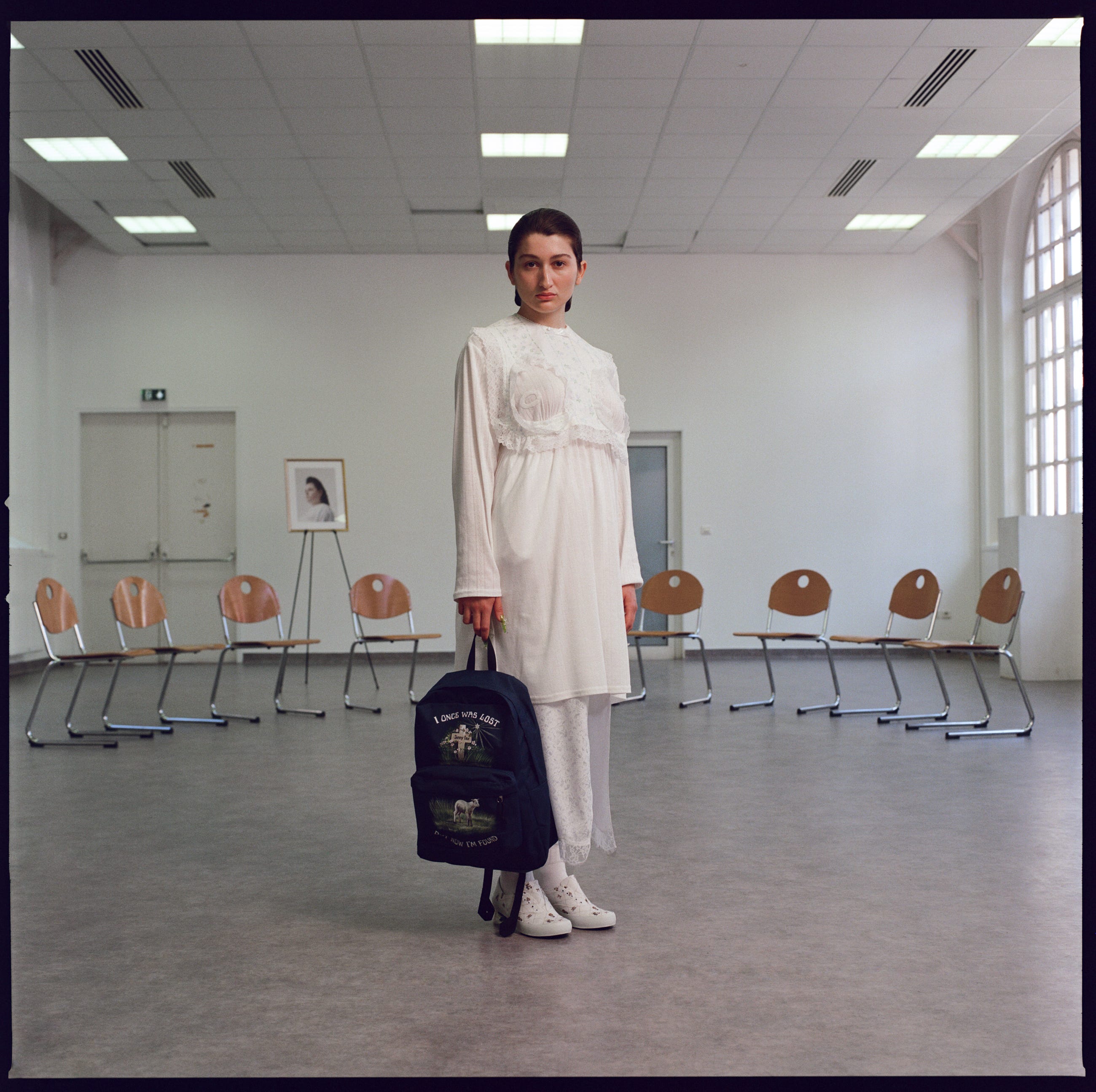
Pass it on—what inspires Jen:
Many people might think I only like cute things. But actually, I rarely focus on using cute elements to make something cute.
In my opinion, things that make you feel pity, or even things that seem annoying or unpleasant, can sometimes create a feeling that connects to cuteness.
I have always wanted to see Jordan Wolfson’s artwork in real life. I really love his art.
I’m also a big fan of The Office. The show inspires me in many ways, especially in terms of creativity and freedom of ideas. I also enjoy watching Love Is Blind—I often use it as a way to study characters.
In film, I really admire Taiwanese directors Hou Hsiao-hsien, Edward Yang, and Tsai Ming-liang. Their generation worked with very limited resources, but they still managed to break through and create something new and free. I find that very inspiring.
My family has also influenced me a lot. Like I mentioned in my presentation, family is something you cannot choose. You are born into it, with both good and bad. You don’t get to choose the people in this community—you learn how to adapt and find your place.
Because of these differences, I’ve become more resilient. At the same time, it has also given me a sense of freedom in another way.
All of these things continue to inspire me in my life.
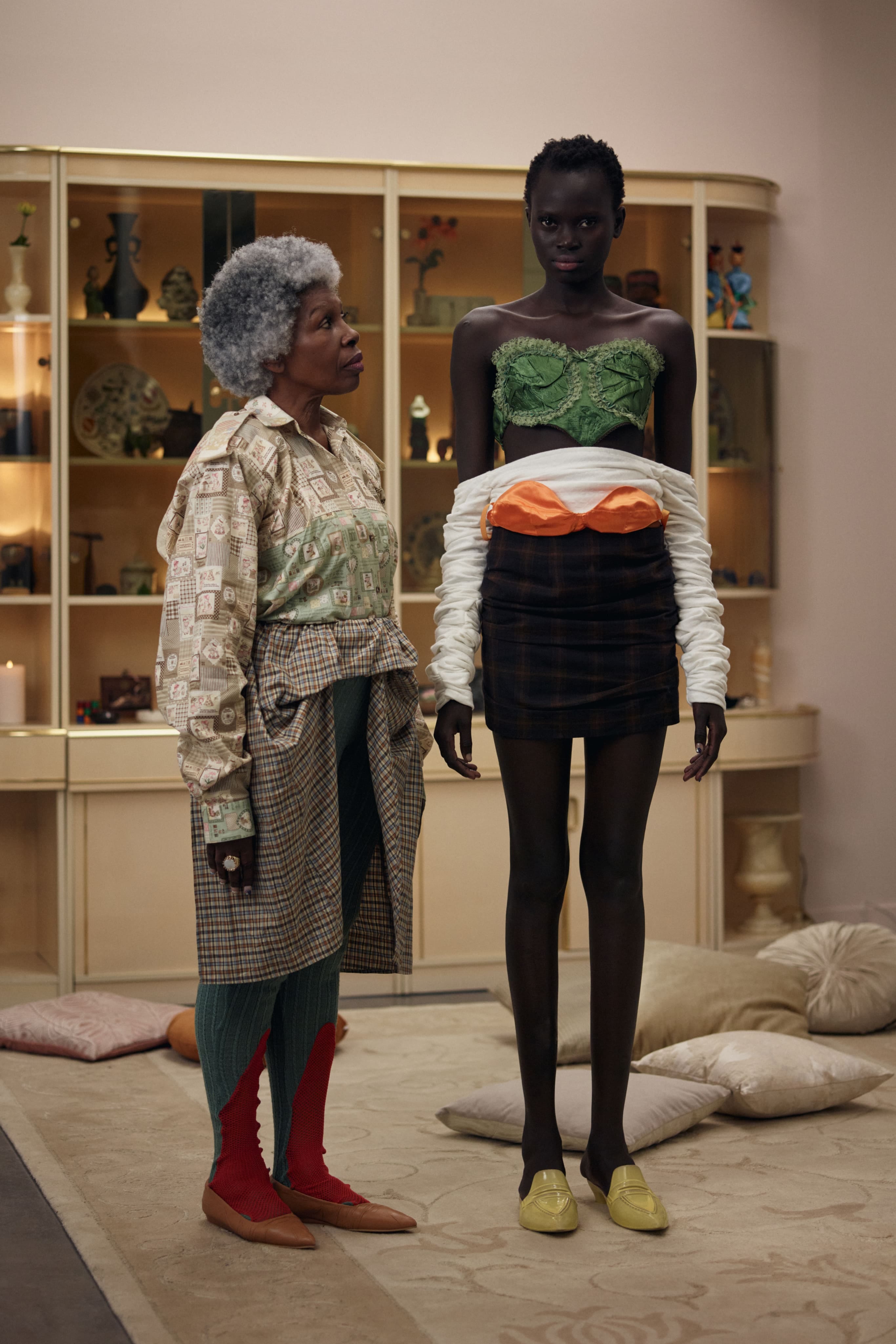
Thank you, dear Jen, for reminding us that fashion doesn’t have to be learned through fashion—and that staying close to life, in all its strangeness and softness, is its own form of power.
Thread by thread, these voices are reweaving what fashion can mean across cultures—binding us, artfully, into a global fabric of care. If you enjoyed this interview, consider subscribing—or buy me a coffee—to support more conversations like this.