

Cynthia Merhej of @renaissance_renaissance
https://renaissancerenaissance.com/
I’m sorry for the delay in writing this—I had my first fashion season back since surgery and then headed off to Tanzania to tend to another part of me (my barefoot, slightly feral nature-girl side). A lot of my work this year has been about nurturing the moving parts within me—and how that translates into my personal and professional lives. I fear that as a society we’ve become a little too obsessed with tidy categories, black-and-white binaries, when life really happens in the grey areas. That’s where all the human sits.
It feels almost serendipitous that this conversation with Cynthia Merhej, who is based in Beirut, circles exactly that. Her brand, Renaissance Renaissance, is named to embrace our ever-changing natures—the flux, the indefinable.
You may have heard of Cynthia when Rama Duwaji wore a coat designed by her to Mamdani’s inauguration, or through her work on the costumes for Durga Chew-Bose’s adaptation of Bonjour Tristesse. But I love Cynthia’s work because it allows me to play with all sides of myself, and still feel good about myself while I’m at it. I’ve never felt entirely feminine—nor entirely masculine, for that matter—it truly shifts day to day. From collection to collection, her designs recognise exactly that flux, translating the friction that makes us human into fabric and cut. It’s a much-needed counterpoint within an industry that still loves to pin narrow visions of womanhood onto bodies.
What follows is as much about self-governance as it is about clothing. It begins, as it should, with the body.
Can I Sleep at Night?
For me, it always comes back to this question: can I sleep at night? That’s really what it is.
Because I’ve realised that when I’m not being truthful to myself, my body reacts. When something isn’t right, I start getting sick, my immunity drops. And I’m like, okay, why am I getting sick three times in a month? Something is really stressing me out; something isn’t sitting right.
What I’ve learned is that when you make the right decision—even if it goes against society, or expectations—you physically feel better. And anyway, it’s all going to catch up with you eventually. You have to really be listening to your body constantly. It’s like an instrument, you know, make sure it’s always tuned.
Everyone’s like, ‘you can’t skip a season.’ And for a long time, I really believed that. I didn’t skip a season through a total banking collapse in Lebanon, violent protests, the collapse of the government, Covid, the port explosion, moving countries. I still didn’t stop. Because I thought, if I skip a season, it’s over—I don’t have a career anymore.
Now I feel like I’ve earned the right to pause. I have other priorities. Number one: mental health. Number two: am I doing something that actually feels truthful? Or am I just doing it because that’s what everyone else is doing?
It’s hard, because people might forget about you—and they might. But you have to trust that it’s for the best. I’m like, whatever comes next will be for the best, because I’m listening to myself. I’m listening to my body. I’m listening to my heart.
A Stage, Not Centre
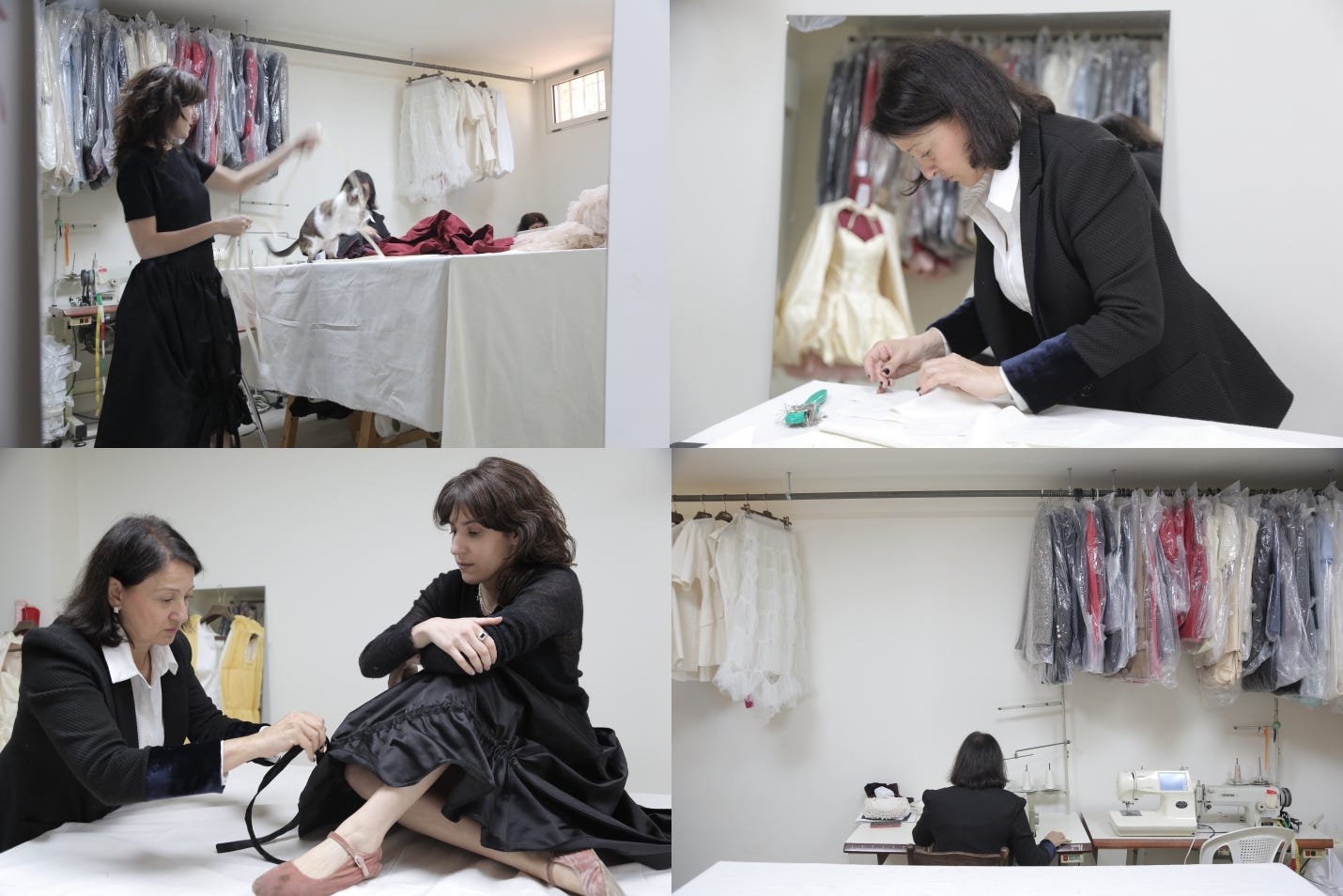
What I do think is quite nice about Beirut is that I can look over everything more clearly. I’m not just doing a sketch and sending it to a factory God knows where, producing it for me, and sending it back. It’s very hands-on, which I really like. In terms of the human element especially—you’re constantly interacting with people, and you can see the direct impact of what you’re doing, which is really fulfilling.
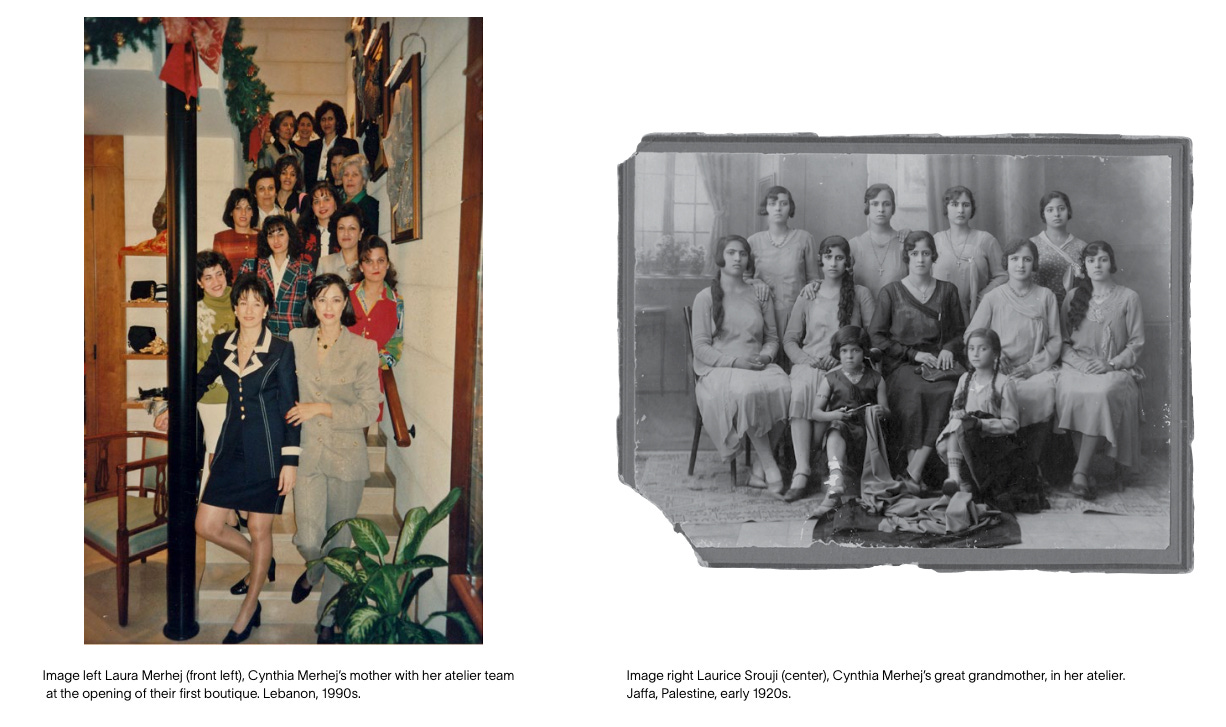
You have to understand, I come from two generations of woman-led couture ateliers. It started with my great-grandmother in Palestine. When she had to leave, they thought they were coming back, so she didn’t take any of her work. They lost everything. We only have two photographs and that’s it.
My mum continued that in Beirut. She built her own atelier and managed around twenty employees. I grew up in that environment. And because I was always very interested in storytelling and narratives, I think my brain just linked those two things together. Even if she never formally taught me garment design, it’s like I absorbed it anyway. It was just in the air.
Sometimes being in the West is difficult, because you’re literally seeing your country being bombed by countries where people are paying taxes. There’s a very strange disconnect there. So mentally, it can feel better to be here, because I’m not having to deal with that contradiction all the time. When I’m here, I’m just doing what I’m doing. I’m not looking at what anyone else is doing.
Paris is a stage, and it’s a great one. It’s centralized, it gives visibility, and it allows people to discover designers they might never encounter otherwise. But that doesn’t mean you have to be based there full-time.
A lot of young designers feel this pressure that if you don’t do a show in Paris, you’re no one. And that’s just not true. There are very successful brands in Lebanon, Egypt, Qatar, Dubai, Saudi Arabia. Maybe no one’s heard of them in the West, but they’re making money, they’re commercially viable.
The problem is that the establishment still follows the same playbook. They look at hype instead of substance, and then they wonder why fashion is imploding and not making any money.
I’m not against Paris at all. I love living there. After 2020, everyone scattered across the world. Now it feels like that’s starting to change—but Paris still offers that sense of community, of not feeling so alone.
But everything is in flux. We talk about decentralization, but what does that actually look like? What does progress even mean anymore?
We were sold globalization as progress for years, and now we can see it’s not working in many ways. So what’s the other proposition? I think that’s what’s being explored right now—mostly by smaller brands.
An Amalgam in Flux
At the end of the day, I am Lebanese. I’m Palestinian. I’m not ashamed of that at all. It shaped a lot of my identity and worldview.
When I was at Central Saint Martins, I had to deal with people telling me, “Oh, you’re Lebanese—do a project about Lebanon.” I would try to do something about Lebanon, but my tutors—who were white men—wouldn’t understand anything. They didn’t understand the context at all. It was incredibly frustrating.
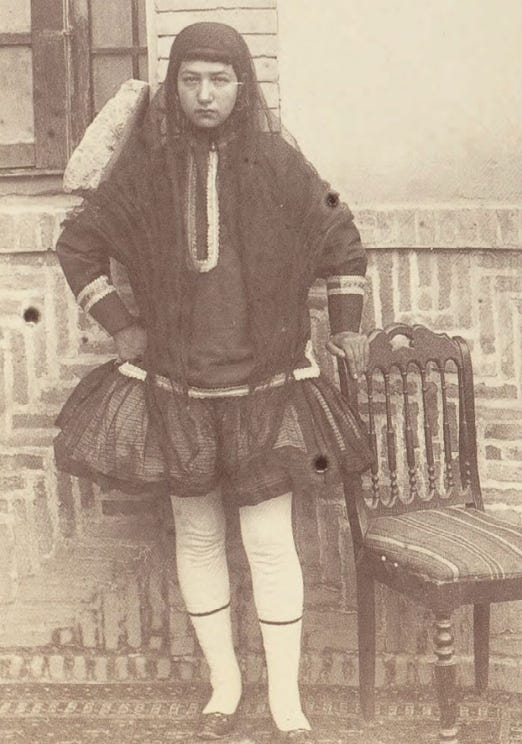
I get asked a lot how Lebanon inspires my work. That’s difficult to answer, because I’m not taking anything literal and putting it into the clothes. Being from Lebanon is interesting because our identity is so fragmented. We’ve had a civil war for so long. So many civilisations have passed through—the Romans, the Umayyads, the Mamluks, the Ottomans, the French. As a Lebanese person, you kind of become that yourself. We’re always absorbing different ideas and cultures. So it can’t really be put in a box. And I don’t want to be put in a box.
People are often shocked when they find out I’m from Lebanon. But if you met me in person, you probably wouldn’t know where I’m from. I’m an amalgam of all those experiences, and I think that shows in my work.
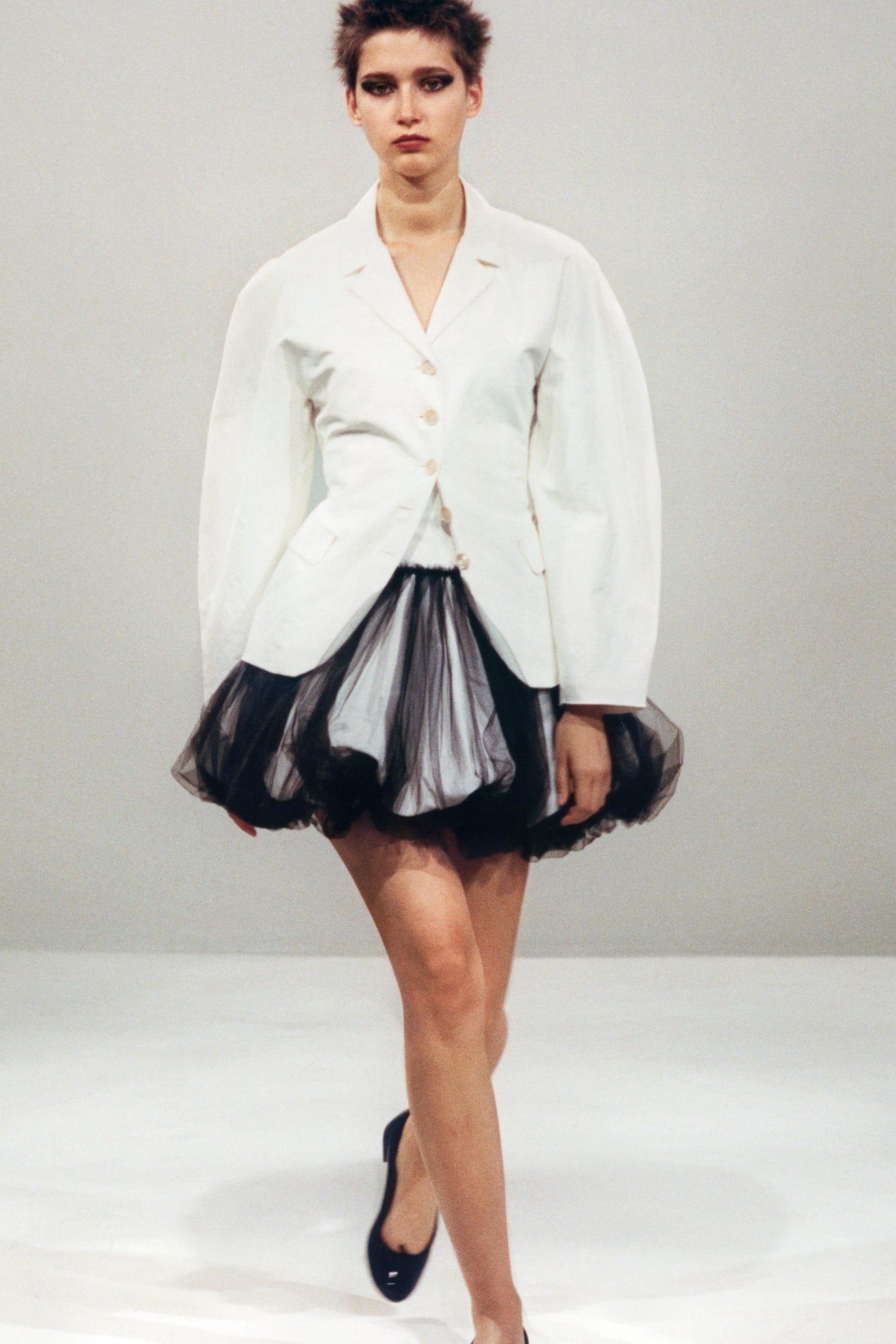
I think the drift toward certain fabrics happened in a similar way. I used to be more into stiff, technical fabrics—more architectural. Over time I started moving toward more fluid fabrics, and that shift happened alongside my own personal shift.
As I started accepting my sexuality and my body more, it didn’t have to be so stiff and structured anymore. It became more about the body—more seductive.
That evolution is really why I named the brand the way I did. It’s about the idea that we should be able to evolve—to shift, to change—and not be one thing.
I don’t think about femininity and masculinity in a fixed way. I feel very girly, and I feel very masculine. I like subverting those codes—mixing something delicate with tailoring. Dressing like a “woman” feels exhausting to me. It feels unattainable.
The way I work is very intuitive. I try not to overthink, because when I do, the work feels overworked and unreal. Fashion often wants to create a perfect package—someone to aspire to—but that perfection isn’t real.
My identity isn’t built from one facet; even if that means the work isn’t easy to package, that’s fine—it acts as a filter. Anyone who wants something easy doesn’t belong here. Anyone who wants something that makes their brain work a little, or makes them feel something—those are the people I want to attract.
In Character
I love cinema, and my dream someday is to direct something, so it was really nice to be part of the world of Bonjour Tristesse. What I loved was looking at clothes from the point of view of a character. When I design, I’m always thinking about a character, but it has to stay vague. You have to think commercially, so you can’t be too specific.
Working with Miyako was great because she would ask very concrete questions. Like, she’s going to the beach—she can only pack three things in her suitcase. What would those three things be? You’re not thinking about making a certain number of tops or skirts, or selling to lots of different women. It’s just one person, and you can really focus on her.
You’re stepping into her life—but through clothes. And when you have your own label, so much of you is invested in it, so it’s actually really nice to invest that care into a character.
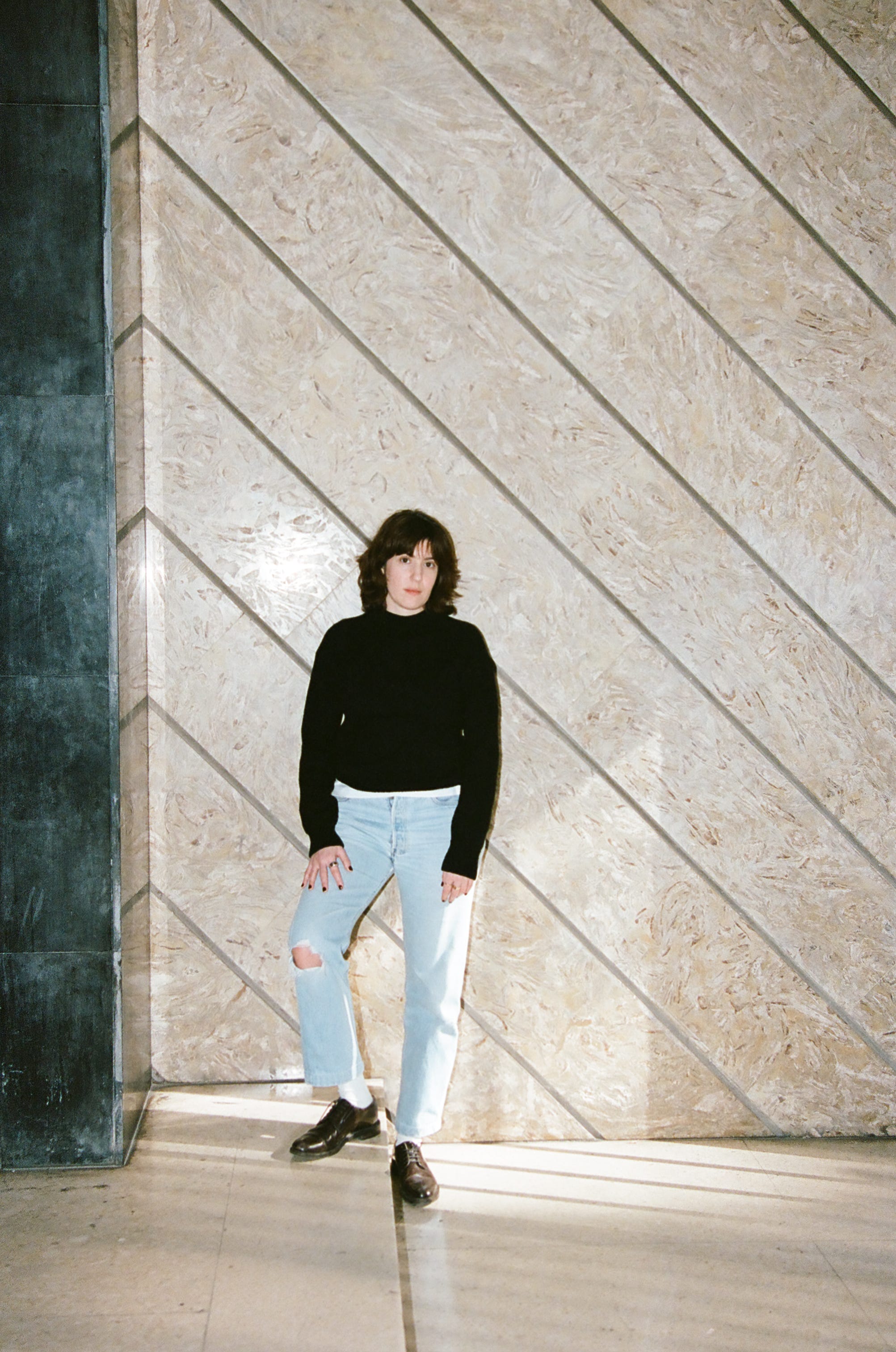
Cynthia’s words to live by: “Everything is temporary”
Pass it on—3 creatives Cynthia thinks are worth our attention
Creative Space Beirut @creativespacebeirut
Ahmed Amer, @ahmedamerofficial
Dalila Barakache, @dalilabarkache
Shaha Raphael, @shaharaphael
Thank you, dear Cynthia, for reminding us that alignment is the only real strategy—and that refusing the centre, the box, and the season can be its own form of power.
Thread by thread, these voices are reweaving what fashion can mean across cultures—binding us, artfully, into a global fabric of care. If you enjoyed this interview, consider subscribing—or buy me a coffee—to support more conversations like this.