

Façon Jacmin @faconjacmin
As I write this, I’m snuggled in a Façon Jacmin jumper. In fact, I probably bundle up in Alexandra and Ségolène Jacmin’s clothes every other day. For their designs tick every box I look for in ready-to-wear (and I’m probably the pickiest customer out there): careful in their creativity, comfortable in their complexity. Considered and inquisitive and sharp. I feel like myself when I wear their clothes.
Perhaps what it comes down to is that the Antwerp-based design duo know how to listen: to the human who will wear their designs, to the textile in their hands, to the environment; to every single person and element involved in the design chain, they afford attention, restraint, and reciprocity. They are, sadly, qualities missing not just from the fashion industry, but from our world at large. Their clothes carry that knowledge—of how attention becomes form.
One of the reasons I moved from the art world into fashion was because I fell in love with fashion’s intersection of creativity and business acuity. As consumers, it’s easy to forget that young designers are also entrepreneurs—and that there are many, many (hopefully human) hands involved in the making of our clothes.
This conversation is special because it offers a rare, honest insight into entrepreneurship, and into the uneasy costs behind buzzwords like “upcycling.” None of us are immune to the questions raised here—about our appetite for chronic newness, our expectation of low prices, and the growing greenwashing of the second-hand market. I hope it encourages you to think more carefully about your purchasing power, and the implications it carries—for young designers, and for our planet.
Timelessness as a Creative Language
Ségolène: I didn’t have a ‘creative’ educational background. I studied engineering, then worked for two years in consulting. I realised I was very unhappy during those two years. I knew I wanted to be an entrepreneur, to take risks—and I was lacking creativity. That was strange for me, because I had always been very mathematical…
Then I thought: actually, I have a twin who is very creative and who is already in the industry! And it would be great to do something together. Doing an entrepreneurial project alone is very hard. I really believe it’s better to have synergies, energy that comes from working with someone else.
So, I asked Alex if she would be open to discussing doing something together, in fashion.
Alex: I always felt like I could express myself best through fashion. I studied at La Cambre, where we were pushed to think in a very free, creative way. That’s where I really discovered myself, and realised how much I could express through clothing.
After school, I worked at Maison Margiela, then at Jean Paul Gaultier, working on pre-collections for women and men. Later, I worked at Dries Van Noten as a seller in Paris.
Seeing the clothes from the other side—fabric, colour, how people actually wear things—was very important for me. And it was around that time that I realised I wanted to create something of my own.
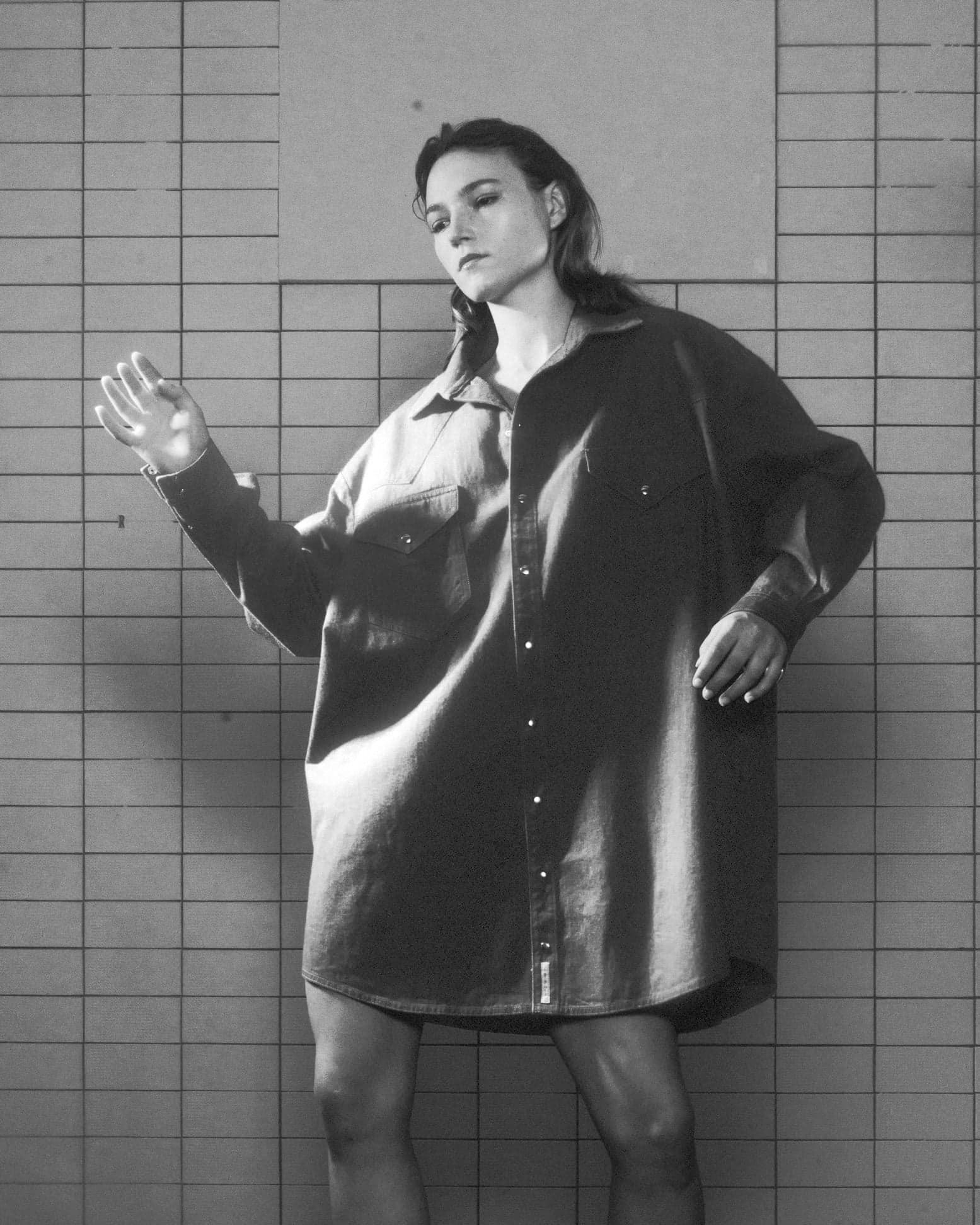
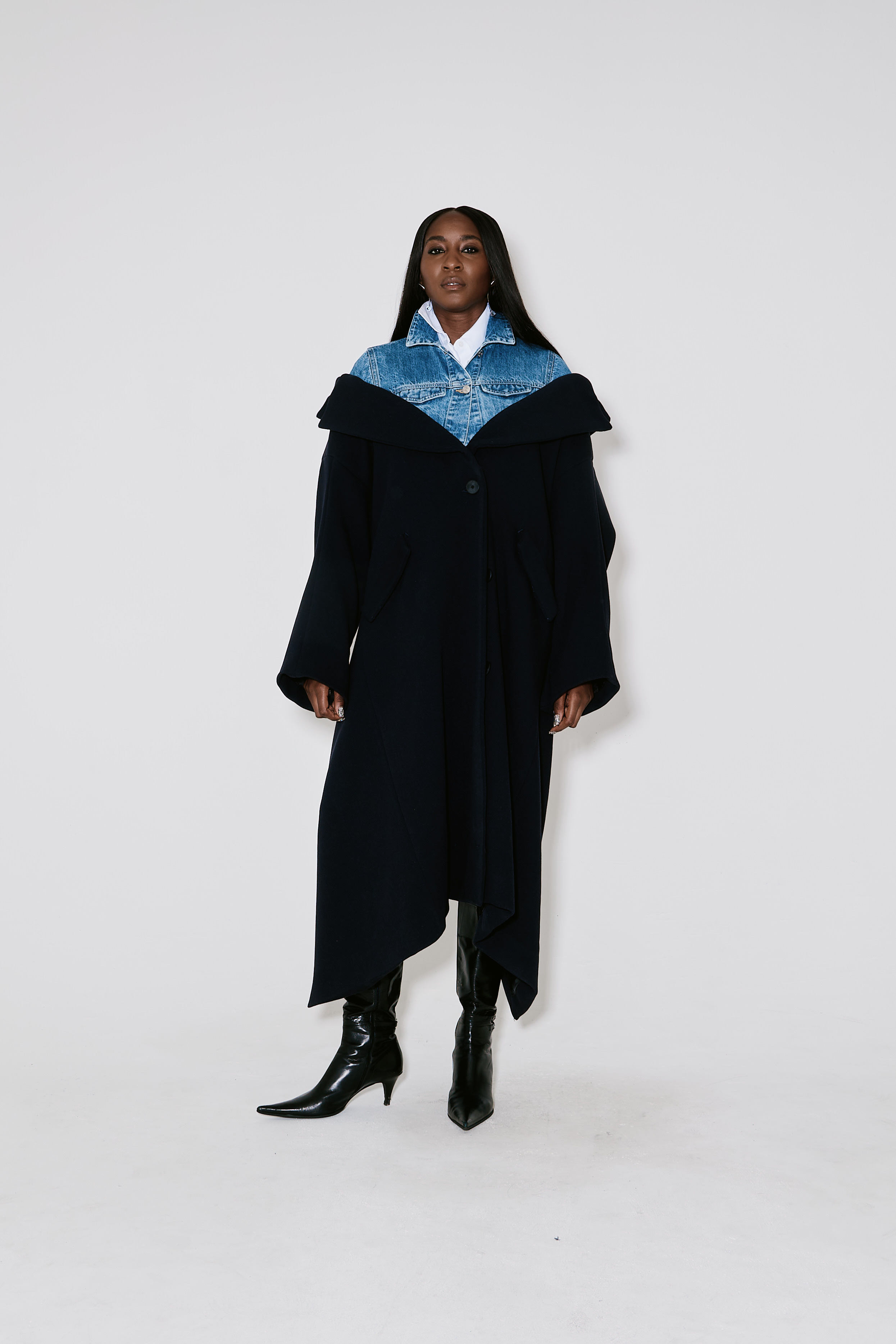
S: Alex came up with the idea of using denim to begin with, to imagine it in styles that could be sophisticated. But it needed to be clothes that we could wear all the time.
A: Denim is like a second skin. It evolves with you and lasts a very long time. It also has a very strong history. So many different types of people have worn denim, across generations, across social backgrounds. It’s fierce, but it’s also intimate.
S: There’s also this transgenerational aspect. You can pass down your denim to your kids.
And people say, no, it’s not sustainable, because denim uses a lot of water, etcetera. And yes, that’s true. But it’s also timeless: it’s a fabric that resists time. You can wear it, wash it, live in it for generations. And even when it’s damaged, it’s still beautiful. Sometimes it’s even better. There’s something very honest about that.
The Cost of Always Being New
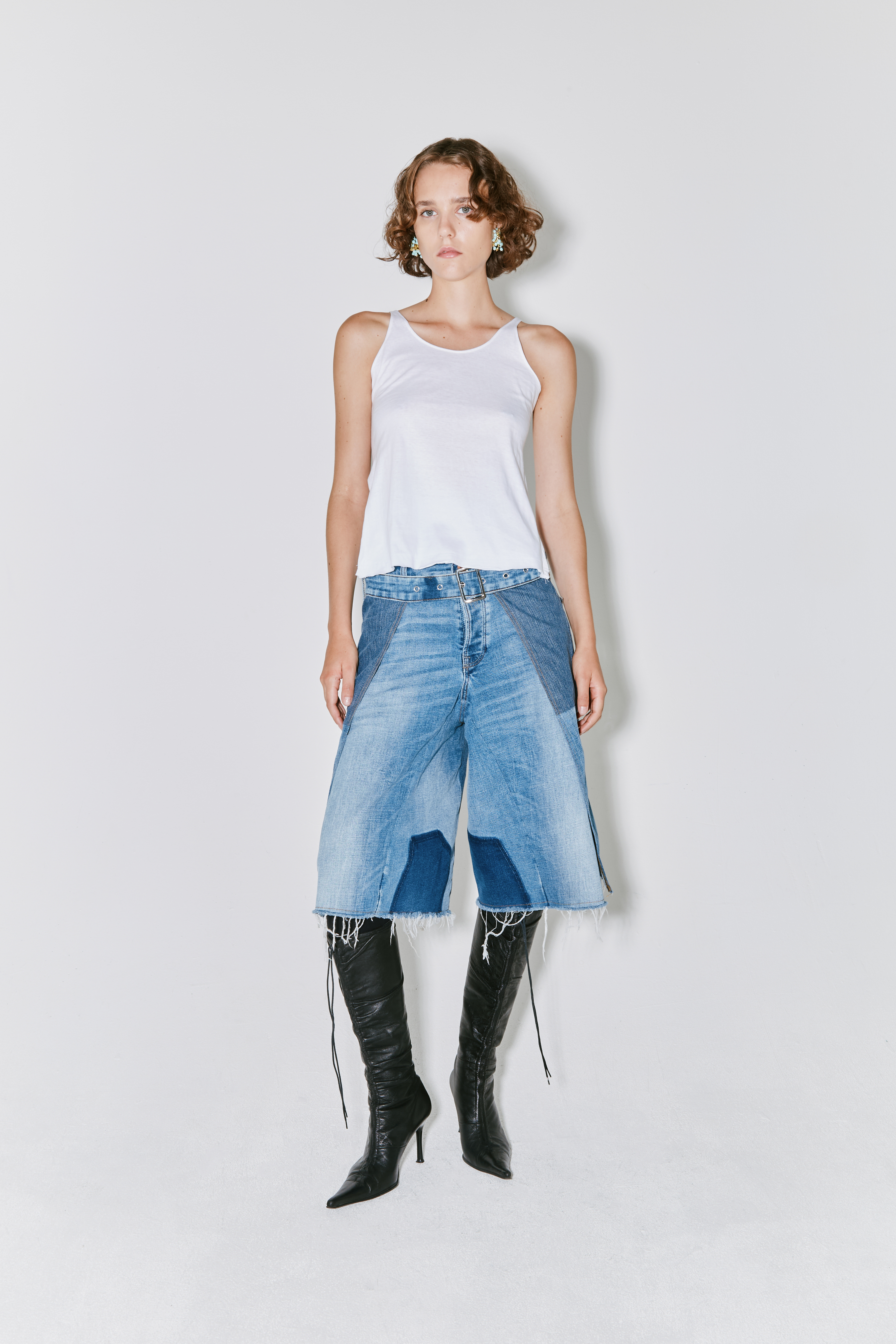
S: At the beginning we started with the timeless denim styles, but we quickly realised that you do need to surprise people and to create desirability. If we do only denim, it can be a bit heavy, and we want to have balance, a sense of relief on the racks.
Time is probably the hardest thing—there is never enough of it. You are always creating, always preparing the next collection, always thinking about what comes next. There was a moment when everyone was talking about slowing down, about carryovers, about not following seasons anymore. We tried that. But even when you believe in timelessness, people would come in at the end of January and say: where is the new collection? They want to dream. They want to be surprised.
A: For me, what is difficult is that there is not enough time to really create.
The rhythm is very fast. Sometimes you have to design quickly, without having time to do proper research, to look, to absorb. You are already thinking about the next season while you are still finishing the current one. That can be frustrating, because creativity really needs time.
S: When we started doing B2B, the pressure became even stronger. Buyers are under a lot of stress themselves. Everyone is anxious. And sometimes that pressure comes back to us very directly.
And there is also everything behind a garment that people don’t always see. Sometimes customers forget what it actually takes to make something. They see the result, but not all the work before—the fittings, the sourcing, the production, the delays.
When you are asked to do more, and faster, and cheaper, all at the same time, that pressure becomes very real. And it doesn’t stay with one person; it goes through the whole team.
A: It can be hard emotionally, because you put a lot into a collection. And sometimes a piece doesn’t work—not because it’s wrong, but perhaps because there wasn’t enough time to tell its story properly. Other times, a piece becomes successful a season later. And then you realise how arbitrary it can be. That’s difficult to accept.
S: You can feel like you’re always running forward. And sometimes you need to stop, to step back, to think: how do we continue without losing ourselves?
Upcycling, Integrity, and Refusing Shortcuts
S: Upcycling was there for us from the beginning. It wasn’t a strategy. It wasn’t something we added later. If you care about time, if you care about how things last, then you naturally start thinking about what already exists.
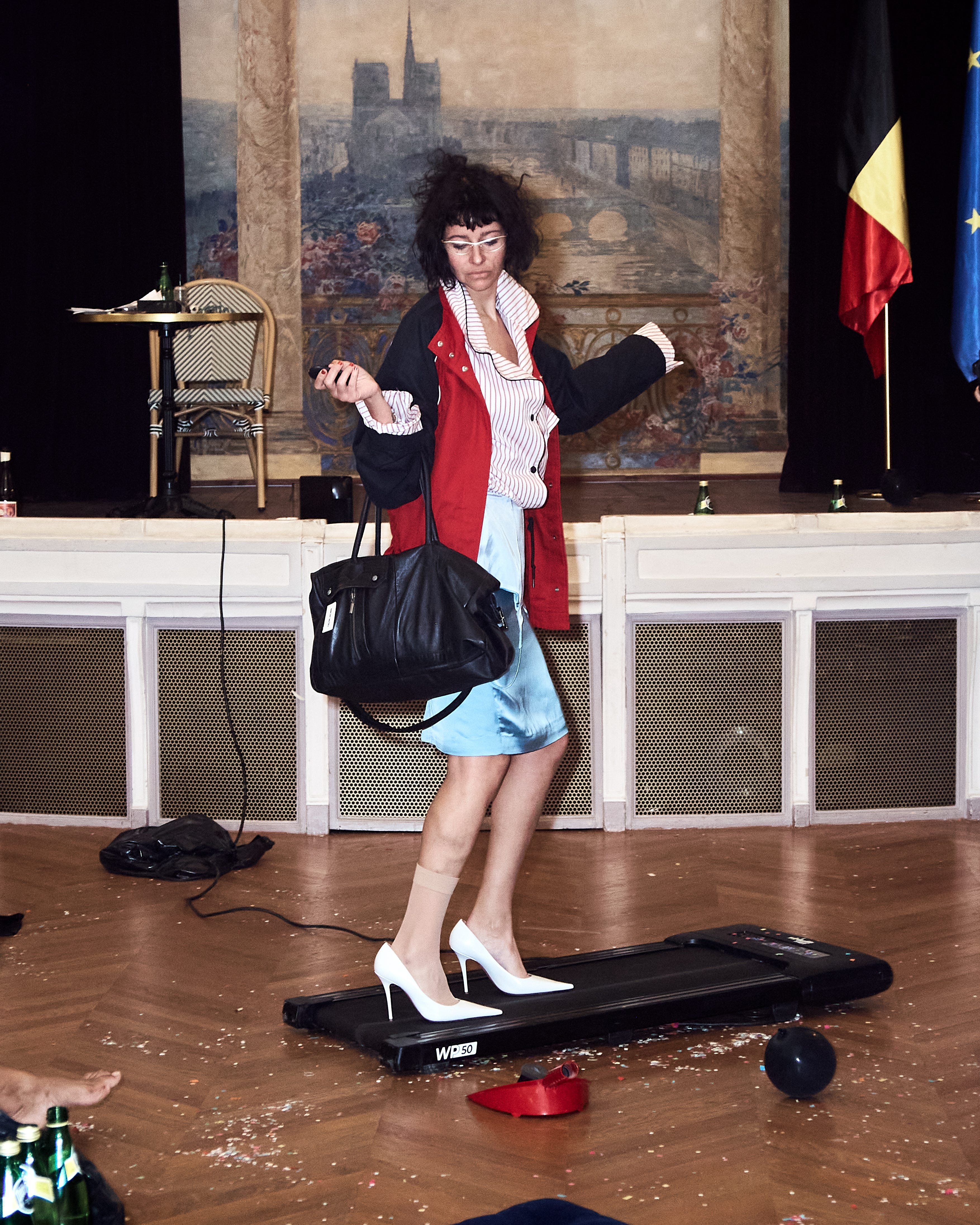
At the beginning, every time we put an upcycled piece in the window of our store, people loved that it was unique. They loved that no one else could have it. Is that still the case? Maybe. But maybe upcycling has also become a trend for some people—and trends come and go.
Upcycling is expensive. It’s not easy to scale. And it doesn’t fit well into B2B systems, which often want reproducibility. Sometimes you feel the pressure to stop, to simplify, to do things the “normal” way.
But if we did that, fashion wouldn’t make sense for us anymore. We wouldn’t be happy. So we continue. We adapt, of course. We listen to feedback. But we don’t want to lose what feels essential to us.
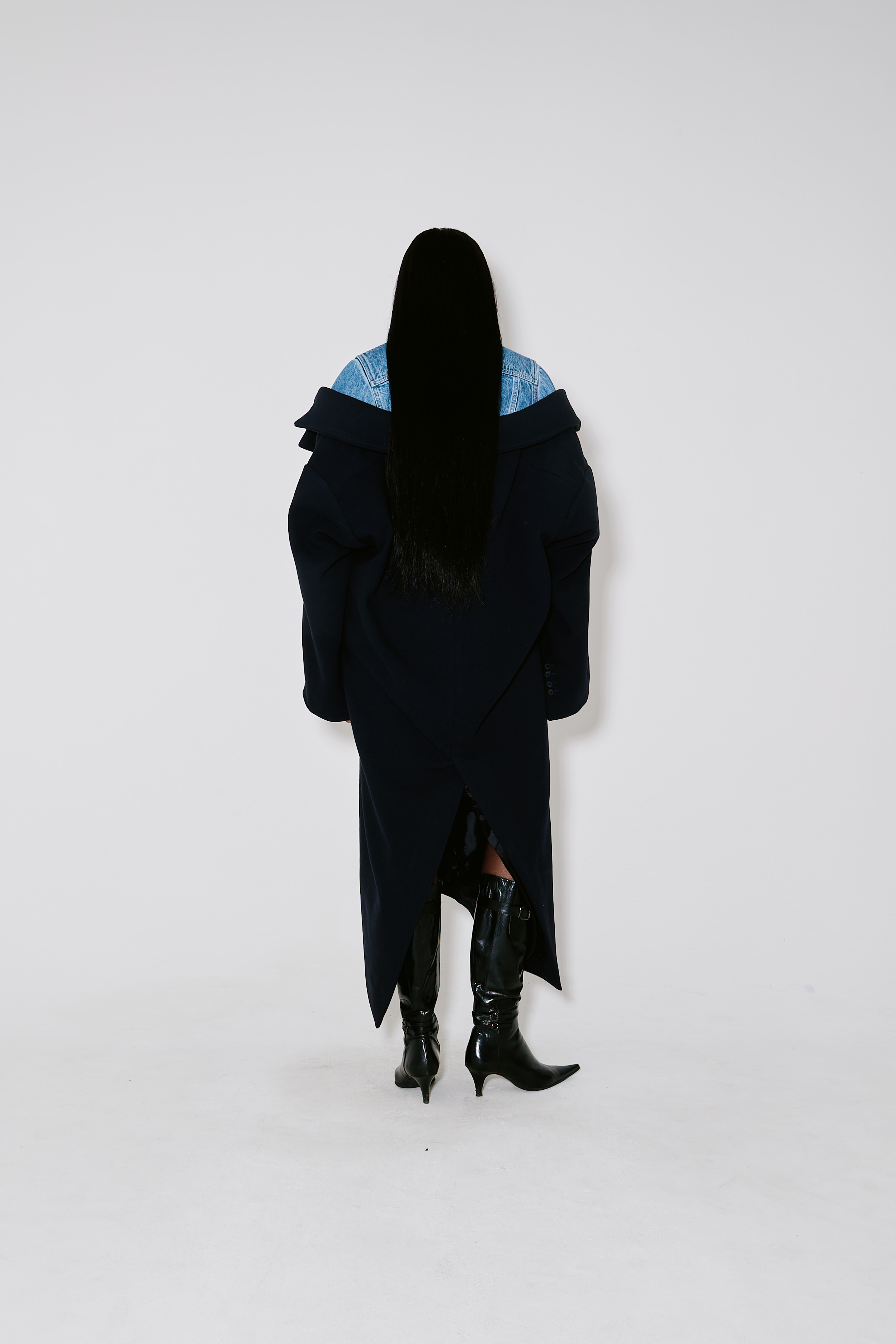
A: It’s also a challenge we enjoy. It forces us to slow down, to think, to design in a different way. You don’t start from a blank roll of fabric. You start with something that already has a life, a shape, constraints, and it pushes you to rethink archetypes, proportions, construction. Designing with limits can be very creative.
S: There’s also something else people don’t really talk about. When we started working with second-hand centres to source materials, one of the owners really took the time to explain to me the not-so-sustainable side of all this. Because when you look at where second-hand clothes actually come from, it’s often not local at all. It can be a whole worldwide chain. Sometimes the clothes travel across countries, across continents. And then with companies like Shein breaking everything, it becomes even more extreme. The shipping, the geographies—it’s crazy.
I don’t think this is something most people know. We imagine second-hand clothes coming from houses next door, from Belgium, from nearby. But often, that’s not the case at all. Sometimes it’s completely unsustainable.
The Body, Comfort, and Designing for Real Life
A: The body is always very important for me. Especially women’s bodies. Clothes have to be lived in. They have to move. They have to feel good against the skin.
I don’t like the idea of forcing a body into clothes. Even strong pieces should feel comfortable. You should feel confident, not restricted.
S: That care really comes through when you see people wearing the clothes. And having our own store helps a lot. Alex’s studio is just above and she can see the different bodies, different ages, different ways of moving. A body at twenty-five is not the same as a body at forty. And that matters.
A: Feedback is important. Of course you can’t take everything. But listening is part of designing. Over time, you learn how to keep your voice while still adapting. It’s a balance.
S: When things get difficult—when the pressure is high, when everyone is tired—what keeps us going is seeing the clothes worn. Seeing someone really take ownership of a piece. Receiving a message saying they’ve never wanted something so much.
That’s when you remember why you do this.
A: In the end, it always comes back to the body—feeling good, feeling comfortable. That’s really what matters.
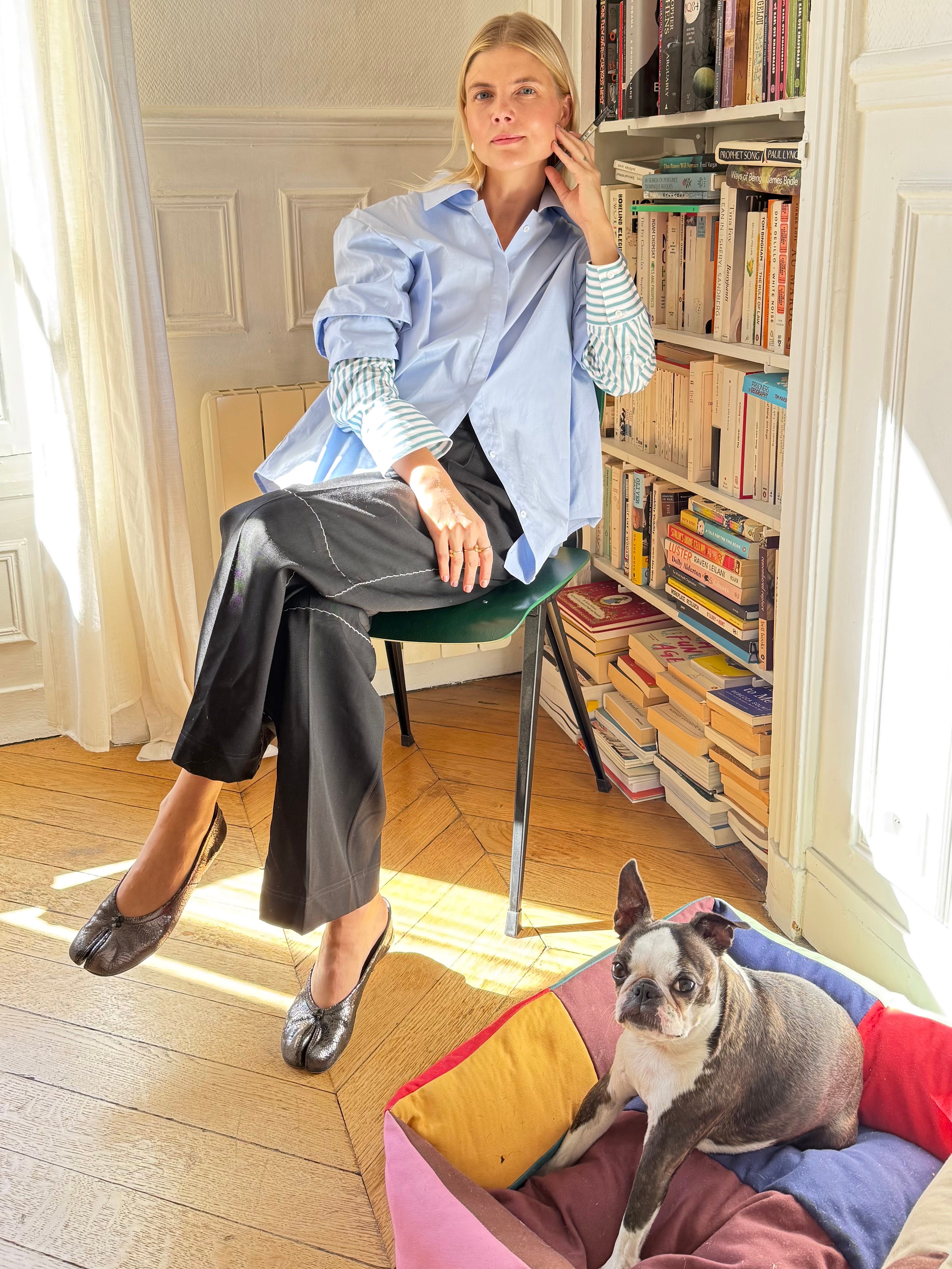
Facçon Jacmin’s words to live by: Entrepreneurship is constant motion — you need to dare, adapt fast, and keep moving forward to keep surprising people.
Pass it on—3 creatives Façon Jacmin think are worth our attention:
Ron Nagle: American sculptor, @ronnagle
D’heygere: Belgian-born, Paris-based accessories designer, (who I’ve also written about here), @d_heygere
Paolo Carzana: Welsh designer working with natural, plant-based materials @paolocarzana
Thank you, dear Alex and Ségolène, for your lucidity, your care, and for holding space for a way of making that resists speed, shortcuts, and easy answers.
Thread by thread, these voices are reweaving what fashion can mean across cultures—binding us, artfully, into a global fabric of care. If you enjoyed this interview, consider subscribing—or buy me a coffee—to support more conversations like this.